What this article answers
- What good pork leg outside looks like
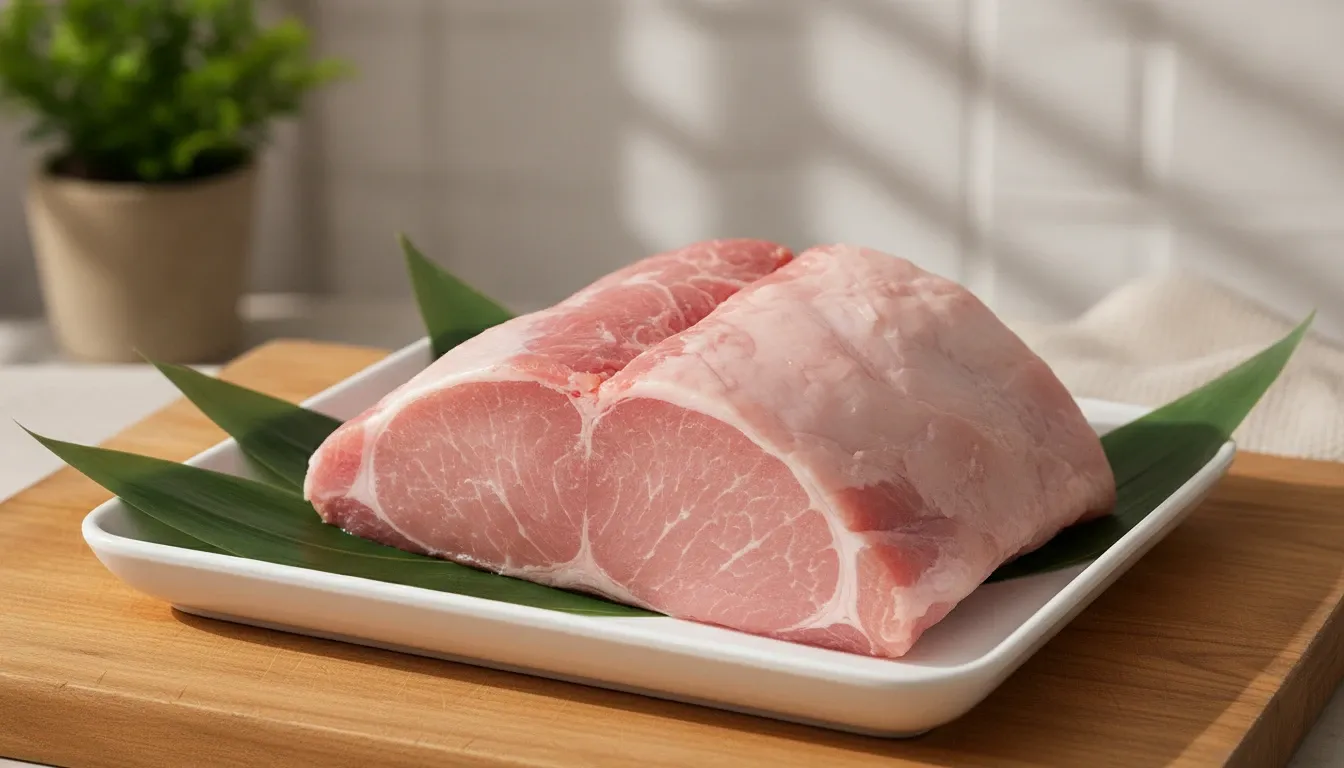
- Deep pink with a sheen. Grain clearly visible and running one way, little white fat, little drip
- How to tell outside from inside
- Outside is deeper pink, with firmer grain, and cheaper. Pick inside for tenderness, outside for value and bite
- When to check for thick sinew
- When buying a block. Roasts, ham, and thin-slice stir-fries need none. Stews can take some
- What to buy for each dish
- Stew: 2–3 cm cubes. Stir-fry: 3–5 mm slices. Ham or roast pork: a block of 500 g or more
Pork leg outside comes from the outer side of the pig’s hind leg. It may also be labeled outside leg, bottom round, or silverside. The muscle on the inner side is the leg inside.
Choosing it starts with the checks you’d use for any meat and for pork in general. On top of those, look at three things: how deep the color of the lean is, how firm the grain is, and whether thick sinew runs through it.
The outside has little fat and firm grain. So choose it by matching those traits to the dish.
What good pork leg outside looks like
| Point | Good | Watch out |
|---|---|---|
| Color | Deep pink, with a sheen | Grayish, dull |
| Grain | Firm, running one way | Running every which way |
| Fat | Little; white to milky white | Yellowish, or bunched in one place |
| Thick sinew | Little | Thick sinew running through the center |
| Drip | Little | A lot, running in the package |
A little deeper pink than the inside
Pork leg outside is normally a little deeper pink than the inside of the leg. The outer side of the hind leg works harder, so it holds a bit more myoglobin, the red pigment of muscle.
| Color | What it means |
|---|---|
| Deep pink, with a sheen | Ideal |
| Fairly deep pink | Typical |
| Grayish | Possibly losing freshness |
| Brown | Metmyoglobin has formed; old |
A deep color is normal. But if it is extremely deep, close to red, suspect an older animal or a loss of freshness.
Grain you can see clearly
The outside has firm grain. On a cut face, you should see the fibers clearly.
| Grain | What it means |
|---|---|
| Clearly visible, running one way | Ideal |
| A little hard to see | Typical, or a boundary between muscles |
| Blurred or breaking apart | Losing freshness, or frozen and thawed |
As with the inside, cut across the grain, at a right angle to it, to keep the texture pleasant.
Check the block for thick sinew
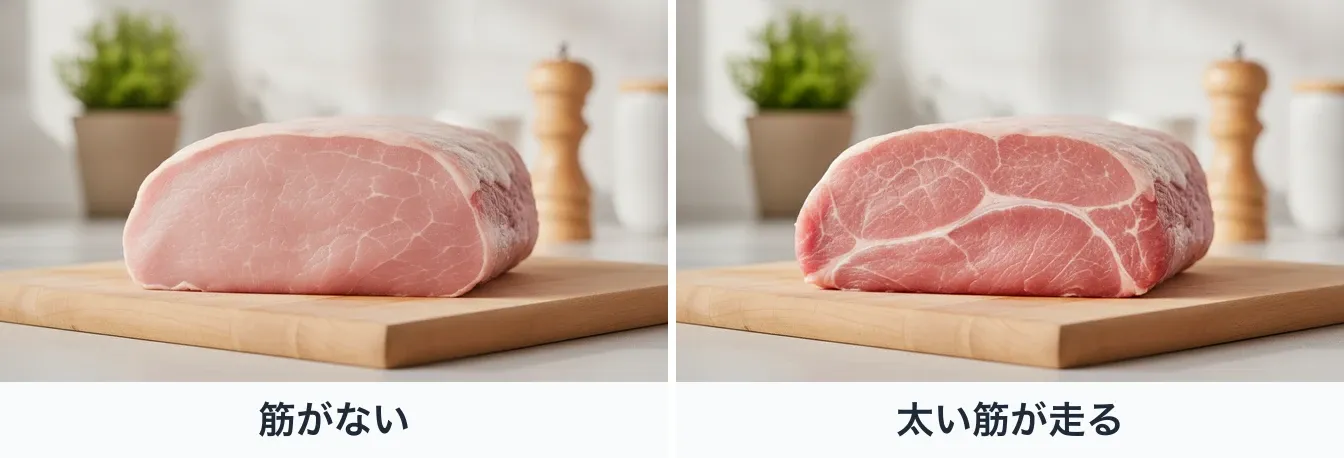
With the outside, the thing to watch most closely is thick sinew (connective tissue).
- No sinew: best for roasts, ham, and thin-slice stir-fries
- Small bits of sinew: fine for stews and ground meat
- Thick sinew running through it: trim it out, or keep the piece for stews. Cooked briefly, it eats tough and stringy
Pre-sliced packs hide sinew, so check for it when you buy a block. With slices, look at each one for sinew.
What to buy for each dish
For stews and curries
- Cubes 2–3 cm (¾–1¼ in), or a block
- Sinew is fine; it softens as it stews
- Keep the fat on the low side
For thin-slice stir-fries
This includes Japanese-style twice-cooked pork, a home stir-fry of thin pork slices with cabbage.
- Slices 3–5 mm (⅛–³⁄₁₆ in) thick
- Check each slice for sinew
- Grain running one way
For ground pork
- Sold as lean ground pork
- No gray mixed in
- Decide whether to add fat based on the dish
For homemade ham and chashu
Chashu is the Japanese braised or roasted pork sliced onto ramen.
- A large block (500 g or more)
- Even in shape
- No thick sinew
For pork and miso soup
This is tonjiru, a Japanese miso soup with thin-sliced pork and root vegetables.
- Thin slices
- Slices that separate easily and are not stuck together
- A little sinew does not matter
What to check in the package
- Chilled: how much drip is in the package, how clearly the grain shows, the color
- Frozen and thawed before sale: expect the lean to cook up drier
- Vacuum-packed: after opening, check that it blooms (turns redder in the air) within 5–30 minutes
Telling the outside from the inside
When a butcher offers both the inside and the outside, tell them apart by how deep the color is.
| Inside | Outside | |
|---|---|---|
| Color | Fairly deep pink | Deep pink |
| Grain | Finer | Firm |
| Fat | A thin layer on the surface | Thin and patchy |
| Price | A little higher | Reasonable |
If you can’t decide, choose the inside when tenderness comes first, and the outside when cost and a firmer bite come first.
Three things to check
- Color: deep pink, with a sheen
- Grain: firm, running one way
- Sinew: an amount that suits the dish
Sources
- Japan Meat Information Service Center (JMTC). "Pork cuts" (in Japanese). Division, location, and features of each cut
- Japan Pork Producers Association. "More about pigs and pork" (in Japanese). Breeds, meat quality, and uses of each cut
- Canadian Food Inspection Agency. Pork – Meat cuts manual. Leg outside: the lateral side of the leg, separated from the leg inside along the natural seam