What this article answers
- Brisée, sucrée, and sablée in one line
- Brisée is unsweetened, sucrée is sweet, sablée has the most butter and crumbles most
- Why tart dough crumbles
- Butter coats the flour before any liquid goes in, so water can't reach the protein and gluten can't form
- The tart shell shrinks in the pan
- The gluten is still tense. Chill it in the refrigerator after shaping, then bake
- The baked crust is hard
- Too much mixing or too much water built gluten. Mix as little as possible
- Using pie dough instead
- It doesn't swap. Tart dough is a container; pie dough rises in layers
Tart dough comes in three kinds: pâte brisée, pâte sucrée, and pâte sablée. All three are short doughs, with flour, butter, and sugar worked together. They differ only in the amount of sugar and egg and in how the butter is mixed in.
What they share is the opposite of bread: they hold back gluten on purpose. This article covers how the three differ, how sablage holds back gluten, and how tart dough differs from pie dough.
Short dough holds back gluten
“Short” here means crumbly and crisp, and the secret behind it is not letting gluten develop.
- Bread develops gluten as far as it can, for chew and spring.
- Tart dough holds gluten back, for a crumbly, crisp texture.
The key to this opposite approach is how you use the butter. In the classification of baked doughs, short dough is the one where the fat is worked in to break up gluten. It sits at the far end from laminated dough.
The usual flour is a low-protein one with little gluten. In the US, that means cake flour or pastry flour, both 7–9% protein.
Pâte brisée, sucrée, and sablée compared
| Pâte brisée | Pâte sucrée | Pâte sablée | |
|---|---|---|---|
| Meaning | Broken dough | Sugared dough | Sandy dough |
| Sugar | Almost none | A lot | A lot |
| Egg | A little | Yes | Yes |
| Butter | Medium | A lot | The most |
| Texture | Crisp and snappy | Firm, breaks cleanly | The most crumbly; melts in the mouth |
| Sweetness | Not sweet | Sweet | Sweet |
| Uses | Quiche, savory tarts, fruit tarts | Fruit tarts, tartlets | Cookies, sablés, tart shells |
The three line up on a continuous scale of fat and sugar.
- Pâte brisée: the unsweetened, savory dough. Crisp, it suits both savory fillings and desserts.
- Pâte sucrée: brisée with sugar added, a sweet dough. The standard for tarts.
- Pâte sablée: the dough with the most butter, and the most crumbly. Close to a cookie.
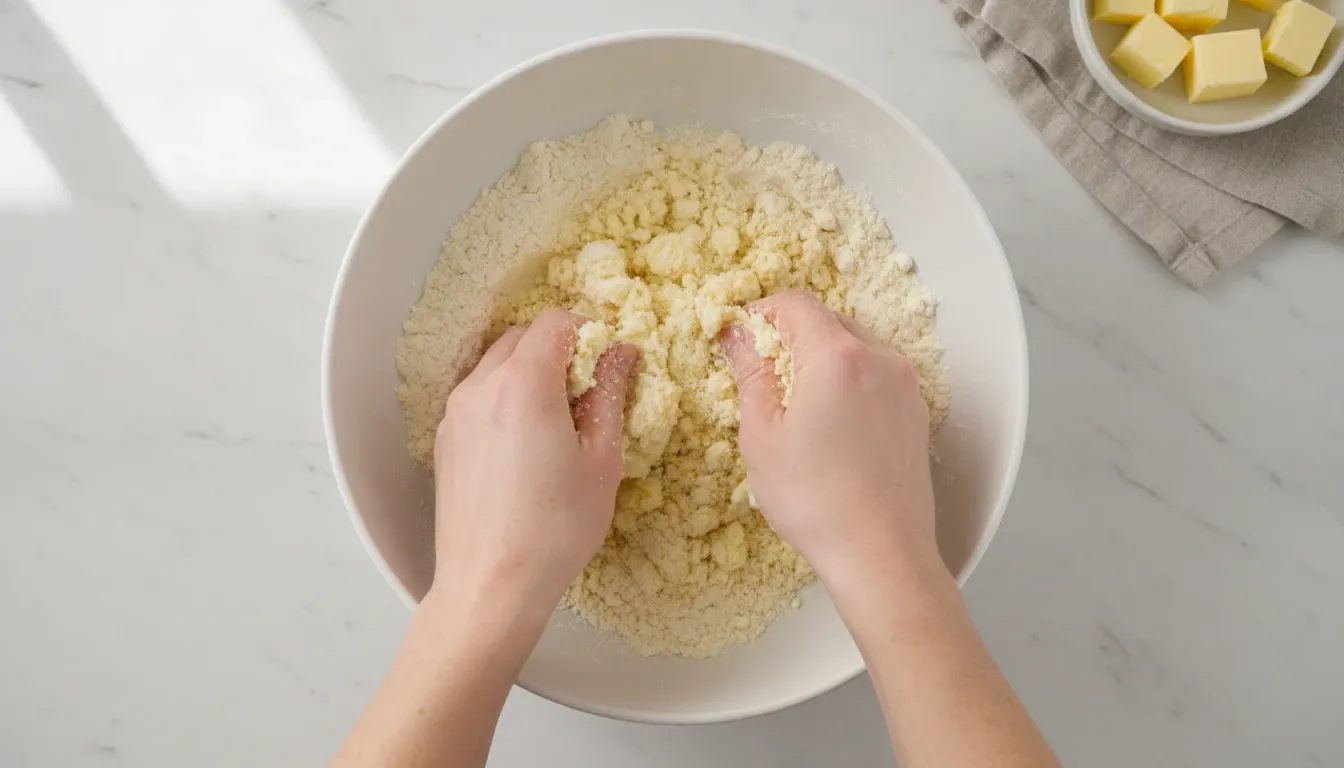
Sablage coats the flour with butter
The standard way to hold back gluten in short dough is sablage, from the French for “making sandy.”
- Cut cold butter into the flour with your fingertips or a pastry scraper.
- Rub the butter into the flour until it looks like rice grains or coarse crumbs.
- As you do, the butter coats each particle of flour.
- When you add the liquid (egg, water) afterward, it has trouble getting into the coated flour.
- No water, no gluten, so the texture turns out crumbly.
Rubbing in versus creaming
Short dough has a second mixing method: creaming. Knowing how it differs from sablage lets you control the texture.
| Method | Order | Texture |
|---|---|---|
| Sablage (rubbing in) | Mix the flour and butter first | Crisp and crumbly. Gluten has trouble forming |
| Creaming | Beat the butter and sugar to a cream, then add the flour | Holds together well, melts in the mouth, good flavor |
Either way, the shared rule is not to overwork it. Knead after the flour goes in, and even a little moisture forms gluten, making the dough hard.
Tart dough versus pie dough
Two questions come up often: how tart dough differs from pie dough, and whether one can replace the other.
| Tart dough (worked in) | Pie dough (laminated) | |
|---|---|---|
| How the butter goes in | Worked in to coat the flour | Folded in as layers |
| Gluten | Held back | Used in moderation (to support the layers) |
| Texture | Crumbly, crunchy | Shattering, layered |
| Rise | Doesn’t rise | Rises high on steam |
Why it turns hard, shrinks, or slumps
| Problem | Cause | Fix |
|---|---|---|
| Hard after baking | Overmixed, so gluten formed / too much water | Mix as little as possible, and go easy on the liquid |
| Shrinks in the pan | The gluten tension hasn’t relaxed | Chill it in the refrigerator after shaping, then bake |
| Slumps or turns sticky | The butter melted / the room is warm | Use cold butter, and keep the dough cool as you work |
| Crumbles and won’t hold together | Not enough liquid or egg / too much butter | Add liquid a little at a time |
To prevent shrinking, rest the shaped dough in the refrigerator so the gluten tension relaxes.
Hold back gluten, then choose by role
- Tart dough (short dough) holds back gluten on purpose, the opposite of bread.
- Pâte brisée (unsweetened), pâte sucrée (sweet), and pâte sablée (the most crumbly) form a continuous scale of sugar and butter.
- The key to holding back gluten is sablage: coat the flour with butter so water can’t get in.
- Pie dough has the opposite structure. Tart dough is a container; pie dough raises layers. Choose by role.