What this article answers
- Remove fishy odor without changing color or taste
- Coat with sake, leave 3–10 minutes, then wipe it off
- How much sake to use
- 15 ml (1 tbsp) per 100 g of fish: just enough to coat
- Which sake to use
- Plain sake with no added salt. Salted cooking sake makes the dish saltier
- Sashimi, or fish that smells strongly
- Sashimi: a soy sauce wash suits it better. Strong odors: a vinegar-water rinse or a boiling-water scald
Sake-arai (酒洗い, “sake wash”) is a Japanese prep technique: you sprinkle an ingredient with sake to remove its odor.
Three mechanisms work at once: evaporating alcohol, neutralizing organic acids, and masking aroma compounds. So it strips odor while adding the mild flavor of sake.
Other prep steps do more than remove odor. Shoyu-arai (a soy sauce wash) draws out water and adds umami. Salting draws out water and denatures protein.
Sake-arai does one job: removing odor. It draws out almost no water, but it leaves the color and taste of the food unchanged, and that is its strength.
How sake removes fishy odor
Three components of sake act on odor compounds, each by a different route.
1. Evaporating alcohol carries odor away
Sake is about 15% alcohol; cooking sake is 13–14%. Ethanol boils at 78.4°C (173°F).
As it evaporates, it carries volatile odor compounds such as trimethylamine along with it. This is the azeotropic effect.
It works best during cooking. But alcohol also evaporates slowly at room temperature, so even an uncooked sake wash removes some odor.
2. Organic acids neutralize trimethylamine
Sake contains about 0.3–0.5% organic acids, including succinic, lactic, and malic acid. Trimethylamine (TMA), the alkaline compound behind fishy smell, reacts with them and becomes a salt that barely evaporates.
A vinegar-water rinse works on the same principle. But sake’s organic acids are at 1/10 or less of the concentration of acetic acid in vinegar (4–5%). So the effect is gentle, and no sourness stays on the food.
3. Aroma compounds mask the rest
Brewing gives sake its aroma compounds, esters such as isoamyl acetate and ethyl caproate. They cover up the trace of odor that remains.
Evaporation and neutralization remove most of the odor, and masking finishes the job. These three layers together are what make sake-arai work.
How to do a sake wash
The basic steps
- Coat: pour sake over the ingredient so it reaches every surface.
- Rest: work it in lightly by hand and leave it for the set time.
- Wipe or rinse: wipe with paper towels. If the odor is strong, rinse quickly under running water first, then wipe.
How much sake to use
| Amount of food | Sake | Notes |
|---|---|---|
| Fish, up to 100 g | 15 ml (1 tbsp) | Just enough to coat it |
| Fish, 200–300 g | 30 ml (2 tbsp) | Same as above |
| Clams or crustaceans, 200 g | 15–30 ml (1–2 tbsp) | Toss in a bowl |
How long to leave it
| Ingredient | Time | Notes |
|---|---|---|
| Fish fillets (yellowtail, salmon, etc.) | 5–10 min | Ideal prep for teriyaki or simmered fish |
| White fish fillets | 3–5 min | Too long and the flesh falls apart more easily |
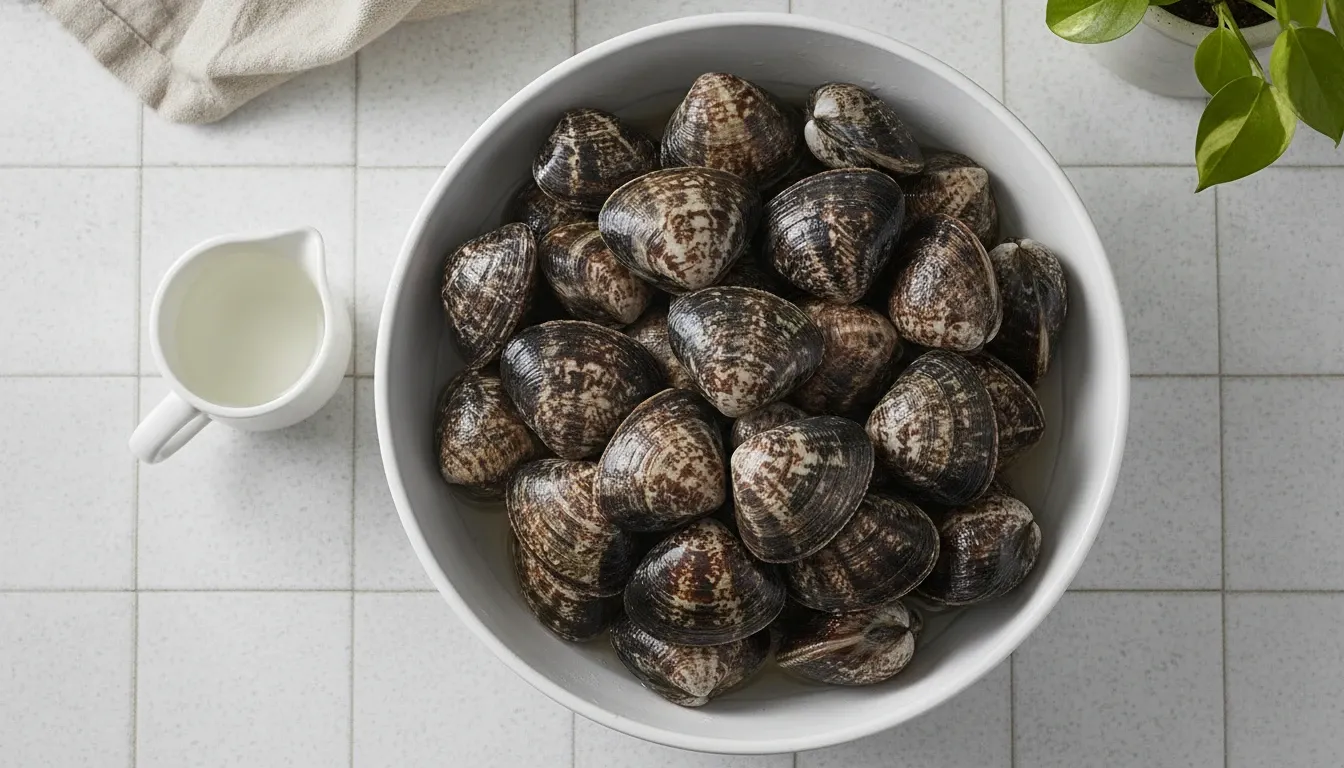
| Clams (Manila clams, hard clams, etc.) | 3–5 min | Coat them with sake in the shell |
| Crustaceans (shrimp, crab meat) | 3–5 min | Keep it short so the alcohol doesn’t soak too far into the meat |
| Sashimi | 1–3 min | Very brief; mostly for aroma |
Sake-arai for fish, shellfish, and sashimi
Fillets for teriyaki and simmered fish
This is where sake-arai pays off most. Use it before dishes seasoned with soy sauce or miso: yellowtail teriyaki, saikyo-yaki (salmon marinated in white miso and grilled), simmered fish.
Sprinkle about 15 ml (1 tbsp) of sake per 100 g of fish, coat it all over, and leave it for about 5 minutes. Wipe off the liquid and odor that rise to the surface with paper towels, then season.
Clams and crustaceans
Clams such as Manila clams and hard clams, and shrimp, have a distinct briny smell of the sea. It, too, comes mainly from volatile compounds such as TMA and dimethyl sulfide.
Put clams in a bowl, sprinkle them with sake, toss lightly, and leave them for 3–5 minutes. If you’re making sakamushi (clams steamed in sake), go straight on to cooking, and prep and cooking become one step.
Coat shrimp in sake after peeling, and they smell far less once cooked. The usual practice is to do this along with deveining.
Sashimi
On sashimi, sake-arai adds aroma more than it removes odor. Work a very small amount of sake in with your fingertips, and wipe it off after 1–3 minutes.
Shoyu-arai suits sashimi better, though, because it draws out water and adds umami at once. In practice, save sake-arai for white-fish sashimi that you don’t want colored or flavored by soy sauce.
Sake, soy sauce, salt, or vinegar?
Sake-arai, shoyu-arai, salting, and a vinegar-water rinse all control odor during prep. Their mechanisms and strengths differ.
| Sake-arai | Shoyu-arai | Salting | Vinegar-water rinse | |
|---|---|---|---|---|
| Main effect | Removes odor + adds flavor | Draws out water + adds umami | Draws out water + denatures protein | Neutralizes odor compounds |
| Mechanism | Azeotropic evaporation + neutralization by organic acids + masking | Osmotic pressure (16% salt) | Osmotic pressure (salt itself) | Acid–base reaction |
| Water removal | Almost none | Moderate | Strong | Weak |
| Odor removal | Moderate to strong (three layers) | Moderate (comes with water loss) | Moderate (comes with water loss) | Strong (chemical neutralization) |
| Umami added | Slight | Yes (amino acids) | None | None |
| Color change | None | Yes (soy sauce color transfers) | None | None |
| Best ingredients | All seafood, especially clams and crustaceans | Sashimi, blanched vegetables, tofu | All meat, fish fillets | Strong-smelling fish, offal |
| Best dishes | Simmered, steamed, teriyaki | Dressed dishes, ohitashi (blanched greens steeped in seasoned dashi), marinated sashimi | Grilled dishes, all simmered dishes | Prep in general |
How to choose:
- To remove odor gently without changing color or taste → sake-arai
- For uncooked dishes where you also want umami → shoyu-arai
- To draw water out of meat or fish you will cook → salting
- For ingredients that smell especially strong → a vinegar-water rinse
Which sake to use, and its limits
Plain sake, not salted cooking sake
| Type | Alcohol | Characteristics | For sake-arai |
|---|---|---|---|
| Seishu (regular drinking sake) | About 15% | No salt; few off-flavors | Best |
| Cooking sake with added salt | About 13–14% | Around 2% salt; has an osmotic effect | Usable, but watch the salt |
| Hon mirin (true mirin, a sweet rice seasoning) | About 14% | 40% or more sugar; adds sweetness | Better for seasoning than for a sake wash |
Salted cooking sake adds salt, so hold back on salt when you season later. To get the real advantage of sake-arai, unchanged color and taste, use plain sake with no salt.
Read the label before you buy. Bottles sold as cooking sake may contain added salt or corn syrup. Bottles labeled aji-mirin or sweet cooking seasoning are mirin-style products, and some have less than 1% alcohol. That is too little alcohol to carry odor away.
Alcohol that stays behind
Leaving it for 5–10 minutes at room temperature does not evaporate all of the alcohol. That’s no problem if you go on to cook the food. For raw dishes such as sashimi, use only a very small amount and wipe it off thoroughly.
When sake alone isn’t enough
In ingredients that have lost a lot of freshness, odor compounds have soaked deep inside. A sake wash on the surface can’t reach them.
Neutralize the odor chemically with a vinegar-water rinse instead, or combine sake-arai with shimofuri (pouring boiling water over the surface to remove slime and odor).
A little sake, 3–10 minutes, wipe off
Sake-arai removes odor through three mechanisms: the azeotropic effect of alcohol, neutralization by organic acids, and masking by aroma compounds.
It draws out almost no water. But it removes odor without changing the color or taste of the food, something shoyu-arai and salting can’t do.
Remember three points:
- Use only enough sake to coat the food.
- Leave it for 3–10 minutes, depending on the ingredient.
- Wipe it off (or rinse it off) so the odor compounds are really gone.
It is ideal prep for sauce-flavored dishes such as teriyaki and simmered fish. Use salting for salt-grilled fish and shoyu-arai for sashimi. Matching the prep to the dish makes it more precise.
Sources
- Takara Shuzo. Cooking effects of cooking sake (seishu): deodorizing and tenderizing (in Japanese). On the three mechanisms: the azeotropic effect, neutralization by organic acids, and masking
- McGee, Harold. (2004). On Food and Cooking. On the azeotropic effect of alcohol and the evaporation of odor compounds
- Kikkoman. Sake (Japanese cooking sake) (glossary of seasonings). On cooking sake with added salt or corn syrup