What this article answers
- Lean vs enriched dough
- Lean is flour, water, salt, and yeast. Enriched adds butter, sugar, egg, and milk, step by step up to brioche
- Why enriched dough is harder to make
- Fat coats the gluten, and sugar takes water from it and slows the yeast
- Why brioche gets its butter last
- Knead the gluten frame first. Added late, butter fills the gaps without breaking it
- What hydration changes
- More water gives bigger bubbles and a chewier, moister crumb, but a stickier dough
- When the first rise is done
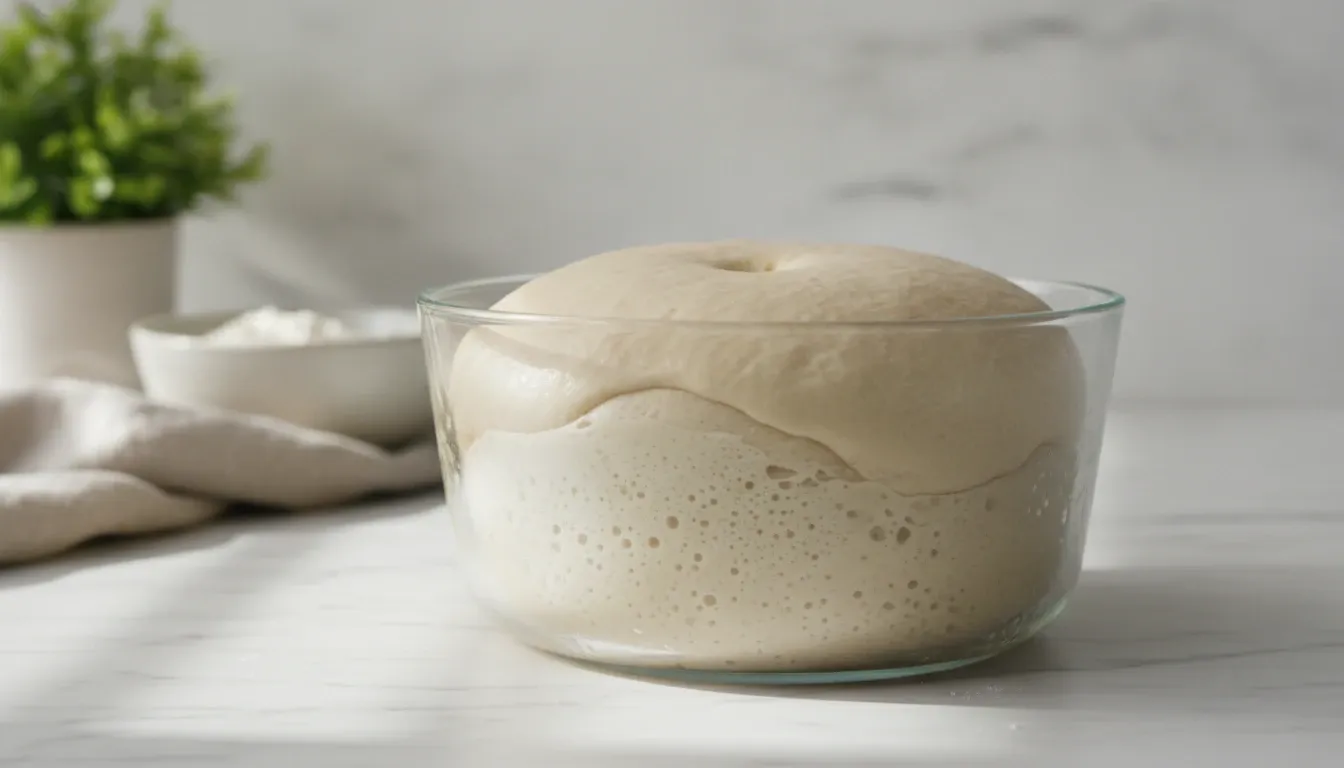
- About doubled, and a finger dent springs back slowly
Baguette, sandwich loaf, pizza, brioche: all of them are yeast doughs. They start from the same four ingredients, flour, water, salt, and yeast. What sets them apart is how much fat, sugar, and egg you add.
A dough with none of these is lean. A dough with plenty is rich, or enriched. There is no sharp line between the two; the dough shifts by degrees as the extras go up. This article covers how lean and enriched doughs differ, what hydration does to texture, and how to deal with overproofing and sticky dough.
The only dough a living thing raises
The baked doughs split into four families on two axes: 1. how the dough rises, and 2. how the fat goes in. Yeast dough is the only one of the four where a living thing, yeast, makes the gas that raises it.
| Dough family | 1. How it rises | 2. How the fat goes in | How it feels to eat |
|---|---|---|---|
| Yeast dough | Yeast (biological) | Worked in | Soft and airy, springs back when you bite |
| Laminated dough | Steam and layers (physical) | Folded in as layers | Shatters, and the layers peel apart |
| Foam-leavened dough | Egg foam (bubbles) | Added after, a little | Light and airy, vanishes in the mouth |
| Short dough | Doesn’t rise | Worked in (a lot) | Crumbles and crunches |
That difference shows up as time. For laminated and foam doughs, the cook supplies the lift just before baking, by building butter layers or whipping eggs. Only yeast dough needs time before baking for the yeast to work. So yeast dough has a waiting step, and with it two ways to fail: waiting too long and not waiting long enough.
Its strength is the chew that springs back
Yeast dough pushes back when you bite it. The gluten film catches the gas the yeast releases and stretches, so the bubble walls stay behind as films. That is the opposite of a foam dough, which melts away, or a short dough, which crumbles.
So pick a yeast dough when chew is part of the dish: sandwich bread, pizza, a baguette with dinner. When the star is a light melt or crisp layers, that belongs to foam or laminated doughs.
Lean and enriched set yeast doughs apart
Yeast doughs split into lean and enriched by the amount of extras: fat, sugar, egg, and dairy.
- Lean: flour, water, salt, and yeast only, or close to it. Crusty breads such as baguette.
- Enriched (rich): plenty of butter, sugar, egg, and milk. Soft breads such as brioche.
The amount of extras shapes everything: texture, flavor, keeping time, and how easy the dough is to handle.
Yeast doughs from lean to enriched
| Dough | Fat | Sugar | Egg | Class | Texture |
|---|---|---|---|---|---|
| Baguette | None | None | None | Lean | Crisp, hard crust; light crumb |
| Pain de campagne | None | None | None | Lean | A sour, wheaty flavor; dense |
| Pizza | A little | A little | None | Close to lean | Chewy and toasty |
| Sandwich loaf | A little | A little | None to a little | Semi-rich | Soft and moist |
| Butter rolls | Medium | Medium | Medium | Enriched | Soft, melts in the mouth |
| Brioche | A lot | A lot | A lot | Enriched | Rich, like butter cake |
From baguette to brioche, the fat, sugar, and egg rise step by step.
The flour shifts too. Lean doughs usually take a medium-high-protein flour, the kind French bakers use for baguettes. Enriched doughs take a high-protein flour. In the US, that means a higher-protein all-purpose flour (the class runs 9–12%) for lean doughs and bread flour (12% and up) for enriched ones. In the UK, strong flour (12–14%) covers the enriched side.
Why enriched dough is harder to handle
An enriched dough, heavy in butter, sugar, and egg, tastes better but is harder to make. The extras get in the way of both gluten and fermentation.
| Extra | Effect on gluten | Effect on fermentation |
|---|---|---|
| Fat (butter) | Coats the gluten and keeps it from stretching | — |
| Sugar | Takes water and slows gluten formation | Too much dries out the yeast by osmosis and slows the rise |
| Egg | Its fat gets in the way of gluten | — |
How hydration changes the texture
Even among lean doughs, hydration (water as a percentage of the flour’s weight) changes the texture a lot.
| Hydration | State of the dough | After baking | Typical breads |
|---|---|---|---|
| 50–60% | Tight and easy to handle | A fine, even crumb | Sandwich loaf, bagels |
| 65–70% | A little soft | A crumb with moderate holes | Standard baguette |
| 75–80% | Soft and sticky | Large and small holes, moist | High-hydration baguette |
| 80% and above | Too wet to knead by hand | Large, irregular holes, chewy | Ciabatta, high-hydration breads |
Underproofed, just right, or overproofed

The hardest part of a yeast dough is judging the rise. Too little and too much both fail.
| State | What you see | After baking |
|---|---|---|
| Underproofed | Not risen enough; a finger dent springs right back | Dense, hard, small |
| Just right | About doubled; a finger dent springs back slowly | Full and soft, smells good |
| Overproofed | More than doubled, with a rough surface and a sour smell; a dent stays | Collapses, tastes sour, coarse crumb |
Why dough turns sticky or slumps
Two common complaints, “my baguette dough is sticky” and “it spreads out flat after shaping,” have clear causes.
| Problem | Main cause | Fix |
|---|---|---|
| Sticky | Hydration is high / underkneaded, so the gluten is undeveloped | Use dusting flour, knead fully, chill the dough |
| Slumps (spreads sideways) | Too little gluten / overproofed / too much water | Use a higher-protein flour, rethink the rise |
| Shrinks back, won’t stretch | The gluten is too tense / not rested enough | Let the dough rest on the bench |
Most stickiness and slumping come from a mismatch between gluten strength and how far the dough has fermented.
Lean to enriched, at a glance
- Yeast doughs run on a scale from lean (baguette) to enriched (brioche), set by the extras: fat, sugar, and egg.
- The richer the dough, the better it tastes, but fat and sugar get in the way of gluten and fermentation, so it gets harder to handle.
- The higher the hydration, the bigger the holes and the chewier the crumb, but the stickier the dough.
- Overproofing is the gluten film tearing and the dough collapsing. Judge the rise by “doubled, and a finger dent springs back slowly.”
To see where yeast dough sits among all baked doughs, read the classification of baked doughs.
Sources
- Reinhart, Peter. (2001). The Bread Baker's Apprentice. On classifying doughs as lean or enriched, and on fermentation
- Takeya, Koji. (1981). Atarashii Seipan Kiso Chishiki [New Basics of Breadmaking] (in Japanese). On bread formulas and managing fermentation
- McGee, Harold. (2004). On Food and Cooking. On gluten in yeast doughs and how it holds gas