What this article answers
- What huangjiang tastes like
- Salty and savory, with almost no sweetness. Salt 14–18%, aged 6 months to 2 years
- The dish it is made for
- Beijing zhajiangmian: fry it with ground pork, then loosen it with water and rice wine
- A substitute if you can't find it
- Hatcho miso 1:1, or red miso and soy sauce 4:1
- A good jar
- Soybeans, wheat flour, salt, and koji only. Liubiju or Wangzhihe from northern China
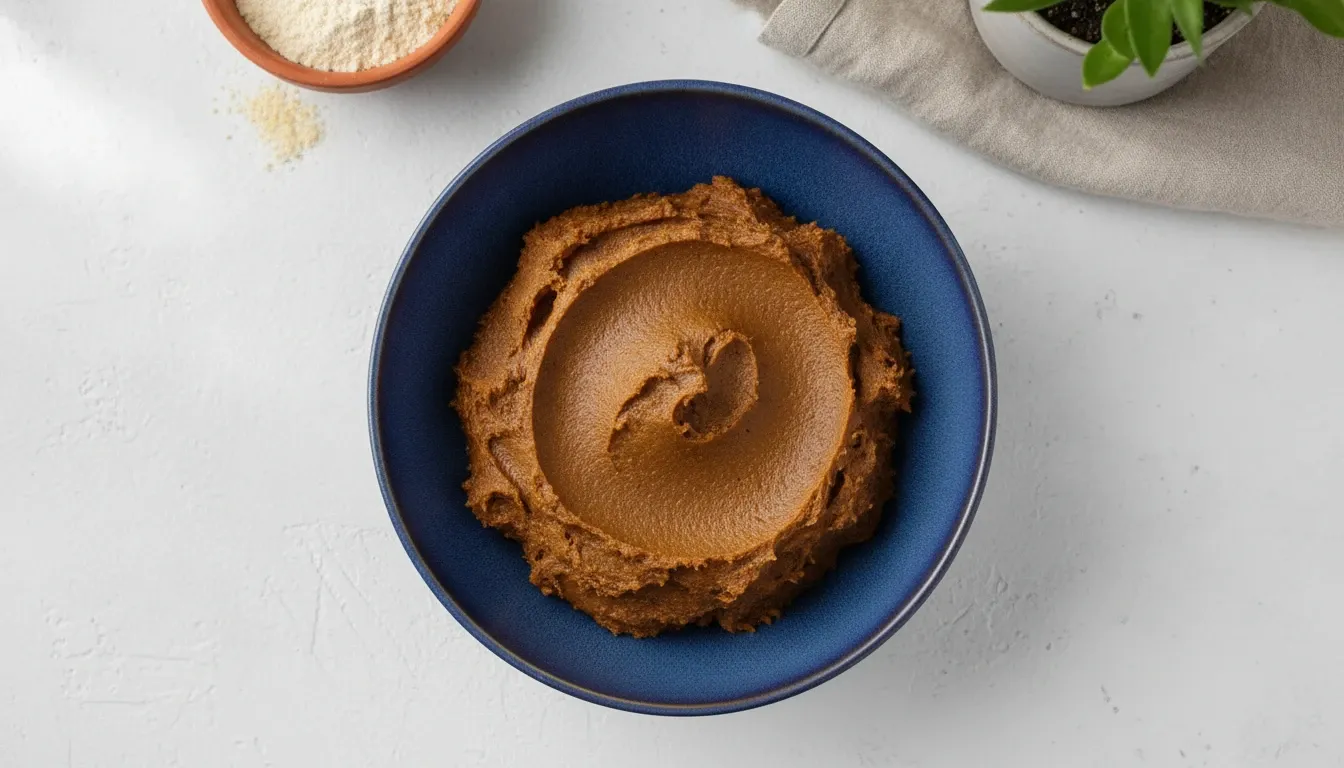
Huangjiang (黄酱, yellow soybean paste) is a traditional fermented paste from northern China, made mainly from soybeans and wheat flour. It is closer to Japanese miso than any other Chinese jiang, especially to hatcho miso, a dark miso made from soybeans alone. Its flavor is salt and umami, with very little sweetness. It underpins the basics of Beijing cooking, such as zhajiangmian (noodles with fried bean sauce) and jingjiang rousi (shredded pork in Beijing sauce).
A salty soybean paste from northern China
The basics
| Item | Details |
|---|---|
| Main ingredients | Soybeans, wheat flour |
| Color | Yellowish brown to brown (lighter than tianmianjiang) |
| Salt | About 14–18% (high) |
| Sweetness | Almost none |
| Fermentation | 6 months to 2 years |
| Main regions | Northern China (Beijing, the Northeast, Hebei) |
| Leading brands | Liubiju (六必居), Wangzhihe (王致和), Tianyuan |
Where it fits in the kitchen
Huangjiang is northern China’s everyday seasoning for salt and umami. Like miso in Japanese homes (golden Shinshu miso or dark hatcho miso), it is used daily, and Beijing home cooking can’t be described without it.
The name means “yellow paste,” after its finished color, a yellowish brown. It is lighter than the near-black tianmianjiang.
What goes in and how it is made
Ingredients
| Ingredient | Typical share | Role |
|---|---|---|
| Soybeans | 50–70% | Protein, the base of umami |
| Wheat flour | 20–40% | Starch, aroma |
| Salt | About 14–18% | Keeps it from spoiling |
How it is made
| Step | What happens |
|---|---|
| 1. Soybeans | The soybeans are cooked |
| 2. Wheat flour | The flour is toasted for a nutty aroma |
| 3. Koji | Koji mold is grown on the soybeans and flour |
| 4. Brining | The koji is mixed with brine and left to ferment |
| 5. Sun fermentation | It ages in outdoor jars for 6 months to 2 years |
Fermenting in the northern sun
The air around Beijing is dry and the sun is strong, so the paste can ferment outdoors. That does three things:
- It speeds up the Maillard reaction. Sunlight and heat deepen the color and aroma.
- It holds back unwanted microbes. Ultraviolet light keeps them down on the surface.
- It lets water evaporate. The paste concentrates and keeps longer.
Japanese miso is made indoors with the temperature controlled. Huangjiang is made outdoors in the sun. That difference is a large part of why the two taste different.
How it tastes and smells
The flavor, element by element
| Element | Strength | Where it comes from |
|---|---|---|
| Salty | Very strong | 14–18% salt, among the saltiest of the Chinese jiang |
| Umami | Very strong | Proteins in the soybeans and wheat broken down |
| Sweet | Faint | Almost none |
| Sour | Mild | Fermentation |
| Bitter, astringent | Mild | Slight |
The aroma
Huangjiang smells salty, deep, and plain. The umami of long fermentation sits inside a crisp, salty outline. It has none of tianmianjiang’s sweet aroma, and its weight is closer to hatcho miso.
Fried in oil, it gives off the distinctive aroma Chinese cooks call jiang xiang. That aroma is what makes zhajiangmian smell so good.
Which dishes it belongs in
Where to use it
| Dish | How well it fits | How to use it |
|---|---|---|
| Zhajiangmian (noodles with fried bean sauce) | Best | The dish huangjiang is made for. Fry it with ground pork |
| Jingjiang rousi (shredded pork in Beijing sauce) | Best | Use it together with tianmianjiang |
| Mapo tofu, northern style | Very good | Doubanjiang (chili bean paste) plus huangjiang |
| Dumpling dipping sauce | Very good | In place of soy sauce, or with it |
| Twice-cooked pork, northern style | Very good | In place of tianmianjiang |
| Marinating seafood | Good | As a salty paste |
Huangjiang in zhajiangmian
The traditional way to make zhajiangmian, a Beijing home dish:
- Fry ground pork.
- Add huangjiang and fry slowly over medium heat.
- Loosen with water and rice wine into a meaty sauce.
- Spoon over noodles and toss with cucumber, scallion, and bean sprouts.
Huangjiang’s job is to lift the meat’s umami and give the dish a salty outline. Sweet versions lean on tianmianjiang. The Beijing original leans on huangjiang, so it is saltier and plainer.
How it differs from Japanese miso
Of all the Chinese jiang, huangjiang is the closest to Japanese miso. Here it is next to hatcho miso and Shinshu miso, the all-purpose miso made with rice koji.
| Point | Huangjiang | Hatcho miso | Shinshu miso |
|---|---|---|---|
| Main ingredients | Soybeans and wheat flour | Soybeans only | Soybeans and rice koji |
| Color | Yellowish brown to brown | Very dark reddish brown | Golden yellow |
| Salt | 14–18% | 10–11% | 11–13% |
| Sweetness | Almost none | Almost none | Slight |
| Aging | 6 months to 2 years | 2–3 years | 3–6 months |
| Uses | Zhajiangmian, stir-fries | Long simmering, dengaku (miso-glazed grilled foods) | Miso soup, all-purpose |
Hatcho miso is the closest. The differences are the wheat flour in huangjiang and its higher salt.
How to choose a good jar
| What to check | A good huangjiang | What to avoid |
|---|---|---|
| Ingredients | Soybeans, wheat flour, salt, koji | Caramel color, preservatives, MSG |
| Origin | Northern China (Beijing, the Northeast, Hebei) | No origin listed |
| Brand | Liubiju, Wangzhihe (long-established makers) | Unknown brands |
| Method | Sun-fermented | Heated, fast-brewed |
Brands to look for
| Brand | Notes |
|---|---|
| Liubiju (六必居) | A Beijing maker founded in 1530. Top grade |
| Wangzhihe (王致和) | The standard for northern cooking |
| Tianyuan | Common in restaurant supply |
Look in Chinese grocery stores or online. Mainstream supermarkets rarely carry it. For reading the Chinese on the label, see how to choose doubanjiang, tianmianjiang, and yellow bean paste.
What to use if you can’t find it
| Substitute | Ratio | What to watch |
|---|---|---|
| Hatcho miso | 1:1 | The closest, but it lacks the wheat flavor |
| Red miso + soy sauce | 4:1 | The soy sauce adds salt |
| Tianmianjiang + salt | 1:0.05 | Still sweet; a fundamentally different paste |
The closest match is hatcho miso with a little soy sauce. To get the Beijing flavor, real huangjiang is still the goal.
How to store it
| State | Where | How long |
|---|---|---|
| Unopened | Room temperature, cool and dark | Until the best-by date (1–2 years) |
| Opened | Refrigerator | 6 months to 1 year |
Its high salt means it keeps well.
One jar for the Beijing flavor
Huangjiang holds up the basics of Beijing and northern Chinese cooking. Little known in many kitchens, it matters enormously there. Zhajiangmian and jingjiang rousi with the original Beijing flavor need it.
How to choose:
- An established Chinese brand (Liubiju, Wangzhihe)
- Only soybeans, wheat flour, salt, and koji on the label
- From a Chinese grocery store or online
How it divides the work with other Chinese jiang:
- Sweetness and richness: tianmianjiang
- Heat: doubanjiang
- The base of salt and umami: huangjiang
With these three, you can cook the main dishes from the north to Sichuan. One jar of huangjiang takes your Chinese cooking from adapted versions to the original flavor.
Sources
- China National Food Safety Standard GB 2718-2014, Fermented Sauces (in Chinese). Definitions of bean paste and flour paste, and rules for ingredients and fermentation
- Miso Health Promotion Committee (in Japanese). Used as the reference for comparing ingredients and koji with Japanese miso
- Wikipedia. "Jajangmyeon". The Korean version of zhajiangmian, with a darker, sweeter sauce; Incheon chefs added caramel to sweeten it