What this article answers
- What tianmianjiang is
- Fermented wheat flour paste, sweet and dark. Salt 8–12%, aged 3–6 months in the sun
- How it is used
- A stir-fry sauce, glaze, and dip, not a soup base. Peking duck, twice-cooked pork, jingjiang rousi
- Twice-cooked pork and mapo tofu
- Tianmianjiang and doubanjiang 2:1
- Not mixing it up with hoisin
- Wheat flour should lead the ingredients. Hoisin is a different, thinner sauce
Tianmianjiang (甜面酱, sweet bean sauce) is a Chinese fermented paste made mainly from wheat flour. The name spells it out: tian (sweet), mian (wheat flour), jiang (paste). It is sweet and rich, and it sits at the heart of Chinese dishes such as Peking duck, twice-cooked pork, and mapo tofu.
A sweet, dark paste of fermented wheat
The basics
| Item | Details |
|---|---|
| Main ingredients | Wheat flour (sometimes soybeans too) |
| Color | Dark brown to blackish brown |
| Salt | About 8–12% |
| Sugar | High (from fermentation, plus added sugar) |
| Fermentation | 3–6 months |
| Main regions | Northern China (Beijing, Hebei province) |
| Leading brands | Liubiju (六必居), Wangzhihe (王致和), Lee Kum Kee |
Where it fits in the kitchen
Tianmianjiang is the sweetness in Chinese cooking. Unlike Japanese miso, it almost never goes into soup. It works as a stir-fry sauce, a glaze, and a dip. Its deep color and sweetness give dishes depth and shine.
Chinese cooks often heat jiang in oil to release its aroma, a technique and an aroma they call jiang xiang. Tianmianjiang is one of its main players.
What goes in and how it is made
Ingredients
| Ingredient | Typical share | Role |
|---|---|---|
| Wheat flour | 50–70% | Starch, food for the koji, the source of color |
| Soybeans | 0–20% (depends on the product) | Amino acids |
| Salt | About 8–12% | Keeps it from spoiling |
| Sugar | Added (depends on the product) | Extra sweetness |
How it is made
| Step | What happens |
|---|---|
| 1. Steamed dough | Wheat flour is kneaded with water, steamed, and shaped into balls |
| 2. Koji | Koji mold (the mold that starts fermentation) is grown on the steamed dough |
| 3. Brining | The koji is mixed with salt and water and left to ferment |
| 4. Fermentation and aging | 3–6 months, fermenting in the sun |
| 5. Grinding | Ground into a smooth paste |
Sunlight during fermentation speeds up the Maillard reaction, building the deep color and layered aroma.
How it tastes and smells
The flavor, element by element
| Element | Strength | Where it comes from |
|---|---|---|
| Sweet | Very strong | Sugars made by koji enzymes, plus added sugar |
| Umami | Strong | Proteins in the soybeans and flour broken down |
| Salty | Moderate | About 8–12% |
| Sour | Mild | Fermentation |
| Bitter, astringent | Faint | A little from melanoidins (the brown compounds of the Maillard reaction) |
The aroma
Tianmianjiang smells sweet, toasty, and caramel-like. The deep aroma of melanoidins from long fermentation leads. It has none of the bright, light aroma of sweet white miso. It is heavier, closer to dark caramel.
Frying it in oil releases that aroma, the toasty jiang xiang that defines so much Chinese cooking.
Which dishes it belongs in
Where to use it
| Dish | How well it fits | How to use it |
|---|---|---|
| Peking duck | Best | Straight from the jar as a dip. Rolled up with the skin |
| Twice-cooked pork (huiguorou) | Best | Stir-fried together with doubanjiang (chili bean paste) |
| Mapo tofu | Very good | A base of richness, with doubanjiang |
| Jingjiang rousi (shredded pork in Beijing sauce) | Best | The lead seasoning in this Beijing stir-fry |
| Chunbing (spring pancakes) | Very good | Spread on the thin pancake and roll the fillings |
| Zhajiangmian (noodles with fried bean sauce) | Very good | Used together with huangjiang |
| Miso-style soups | Avoid | Not what it is for |
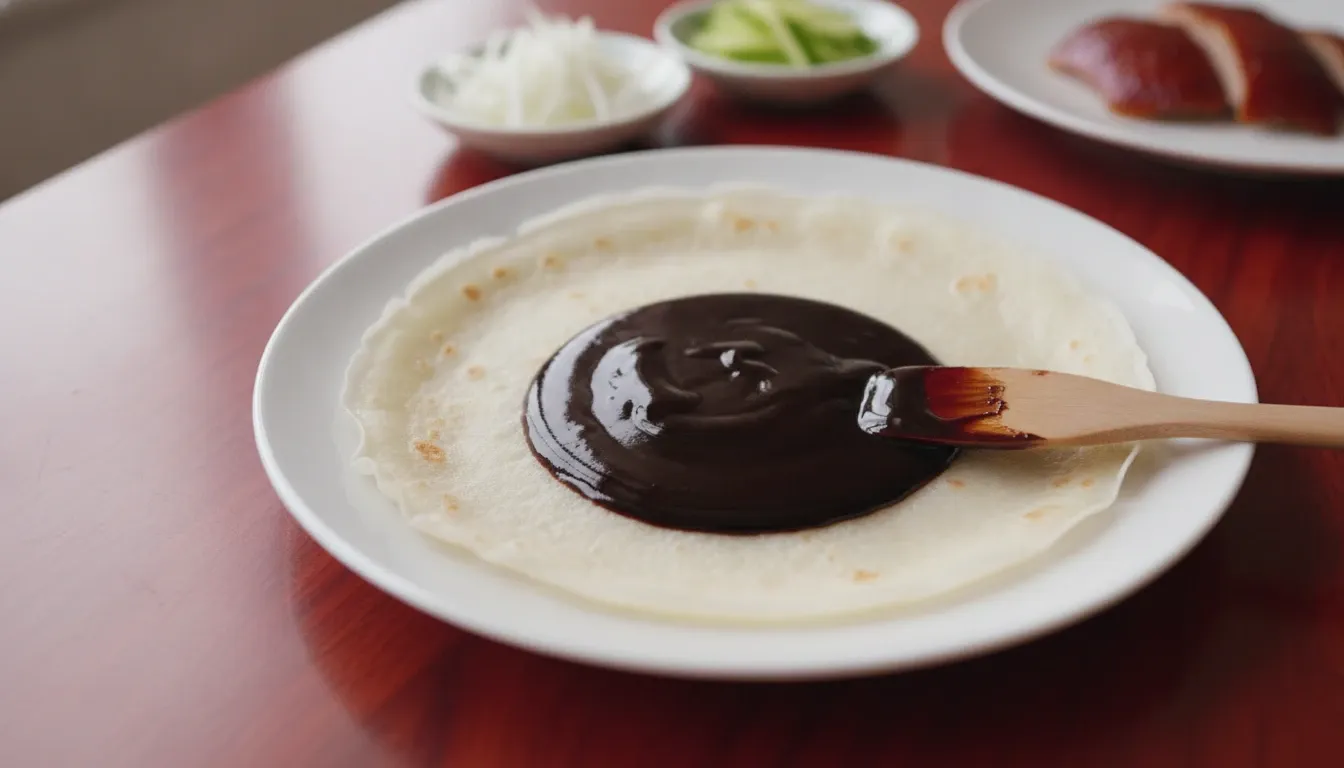
What it does for Peking duck
How Peking duck is eaten:
- Slice the roasted skin.
- Lay it on a thin pancake (a crepe-like wrapper).
- Spread tianmianjiang on the pancake with a spoon.
- Roll it up with scallion and cucumber.
Tianmianjiang balances the duck fat with sweetness, which pulls the other way. Salty soy sauce or sharp vinegar can’t stand up to the rich fat of Peking duck. Only a sweet, rich paste like tianmianjiang holds it in balance.
Foods and seasonings that go with it
Foods
| Group | Foods | Why they work |
|---|---|---|
| Meat | Pork (belly, loin), chicken, duck | Animal fat and sweetness balance each other |
| Vegetables | Cucumber, scallion, cabbage, green bell pepper | Spring pancakes, stir-fries |
| Wheat foods | Thin pancakes, spring pancakes, mantou (steamed buns) | Paired with the staple foods of the north |
Mixing it with other seasonings
| Combination | Typical ratio | Use |
|---|---|---|
| Tianmianjiang + doubanjiang | 2:1 | Twice-cooked pork, mapo tofu |
| Tianmianjiang + soy sauce | 3:1 | Sauce for jingjiang rousi |
| Tianmianjiang + huangjiang | 1:1 | Meat sauce for zhajiangmian |
| Tianmianjiang + rice wine + sugar | 5:2:1 | Marinades, a base for braising |
How it differs from Japanese miso
Hatcho miso, a dark Japanese miso made from soybeans alone, looks the most like it.
| Point | Tianmianjiang | Hatcho miso |
|---|---|---|
| Main ingredient | Wheat flour | Soybeans only |
| Color | Blackish brown | Reddish brown to blackish brown |
| Sweetness | Strong (sugar often added) | Almost none |
| Saltiness | Moderate | Moderate |
| Heat | Suits high-heat stir-frying | Suits long simmering |
| Uses | Stir-fry sauce, dip | Simmered dishes, dengaku (miso-glazed grilled foods) |
They may look alike, but the ingredients, the sweetness, and the uses all differ. Hatcho miso with sugar can stand in for tianmianjiang, but it won’t bring back the real flavor.
How to choose a good jar
| What to check | A good tianmianjiang | What to avoid |
|---|---|---|
| Ingredients | Wheat flour, soybeans, sugar, salt, koji | Caramel color, preservatives, artificial sweeteners |
| Country of origin | China (Beijing, Hebei) | — |
| Brand | Liubiju, Wangzhihe, Lee Kum Kee | Unknown brands |
| Method | Sun-fermented | Heated, fast-brewed |
Jars are labeled sweet bean sauce, sweet flour paste, or sweet wheat paste. Some brands and recipes use the name interchangeably with hoisin, but hoisin is a different sauce. It is thinner and lighter, built on fermented soybean paste, and seasoned differently. Check that wheat is the main ingredient.
Brands to look for
| Brand | Based in | Notes |
|---|---|---|
| Liubiju (六必居) | Beijing | A long-established maker (founded 1530) with a traditional method |
| Wangzhihe (王致和) | Beijing | The standard for northern cooking |
| Lee Kum Kee | Hong Kong | Widely distributed and easy to find |
For reading the Chinese on the label, see how to choose doubanjiang, tianmianjiang, and yellow bean paste.
How to store it
| State | Where | How long |
|---|---|---|
| Unopened | Room temperature, cool and dark | Until the best-by date (1–2 years) |
| Opened | Refrigerator | About 6 months |
High in salt and sugar, it keeps well.
The sweetness, richness, and color
Tianmianjiang carries the sweetness, richness, and color of Chinese cooking. Peking duck, twice-cooked pork, and jingjiang rousi can’t taste like the originals without it.
How to choose:
- An established Chinese brand (Liubiju, Wangzhihe, Lee Kum Kee)
- No caramel color or artificial sweeteners on the label
- Refrigerated once opened
How it divides the work with other Chinese jiang:
- Heat: doubanjiang
- The base of salt and umami: huangjiang
- Sweetness and richness: tianmianjiang
Combine the three jiang, and the range of Chinese dishes you can cook widens dramatically.
Sources
- China National Food Safety Standard GB 2718-2014, Fermented Sauces (in Chinese). Definitions of bean paste and flour paste, and rules for ingredients and fermentation
- Miso Health Promotion Committee (in Japanese). Used as the reference for comparing ingredients and koji with Japanese miso
- The Woks of Life. "Sweet Bean Sauce (Tian Mian Jiang)". English names on the jar, wheat as the main ingredient, and how it differs from hoisin