What this article answers
- What Sanuki white miso is
- A sweet, pale rice miso from Kagawa on Shikoku. Salt 5–7%, koji ratio 20–25, aged 1–4 weeks
- How it compares with Saikyo miso
- Same salt, koji, and aging. A little heavier and richer. Either can stand in for the other
- Where it works best
- Anmochi zoni, white miso ozoni, Saikyo-zuke. Not for long simmers
- How to buy and keep it
- Soybeans, rice, and salt only, made in Kagawa or Shikoku. Refrigerate, and use within 1 month of opening
Sanuki white miso (讃岐白味噌, Sanuki shiro miso) comes from Kagawa Prefecture, on the island of Shikoku. Sanuki is the old name of the region. Along with Saikyo miso from Kyoto, it is one of Japan’s two leading white miso.
It has a high koji ratio and little salt, so it tastes sweet. Koji is rice cultured with a mold that turns starch into sugar. The miso is tied above all to anmochi zoni, Kagawa’s New Year soup with rice cakes filled with sweet bean paste.
What sets Sanuki white miso apart
The basics
| Item | Details |
|---|---|
| Type | Rice miso, white and sweet |
| Color | Pale yellow to cream |
| Salt | About 5–7% |
| Koji ratio | 20–25 |
| Fermentation | 1–4 weeks (short) |
| Main regions | Kagawa Prefecture and the rest of Shikoku |
| Leading makers | Yamahisa, Kawanishi Miso |
The koji ratio measures how much rice koji goes in for the soybeans. A higher number means more koji and more sweetness.
Where it sits among miso
Sanuki white miso has long shaped how people cook in Sanuki, in western Japan. It runs deep in home cooking across Shikoku and western Japan, above all in ozoni, the rice-cake soup eaten at New Year.
How it differs from Saikyo miso
Both belong to the same white miso family, but their characters differ slightly.
| Point | Sanuki white miso | Saikyo miso |
|---|---|---|
| Salt | 5–7% | 5–7% |
| Koji ratio | 20–25 | 20–25 |
| Aging | 1–4 weeks | 1–4 weeks |
| Sweetness | Strong, slightly heavy | Strong, refined |
| Richness | Fairly strong | More delicate |
| Texture | Smooth | Smoother (ground finer) |
| Signature dish | Anmochi zoni | White miso ozoni, Saikyo-zuke |
The two are interchangeable at heart, and either works in place of the other. Think of them as regional brands of one product.
A jar sold only as “white miso” or “shiro miso” may be neither. Supermarkets outside Japan sell a saltier, savory Shinshu miso under the same name. Look for “sweet,” Saikyo (西京), or the region on the label.
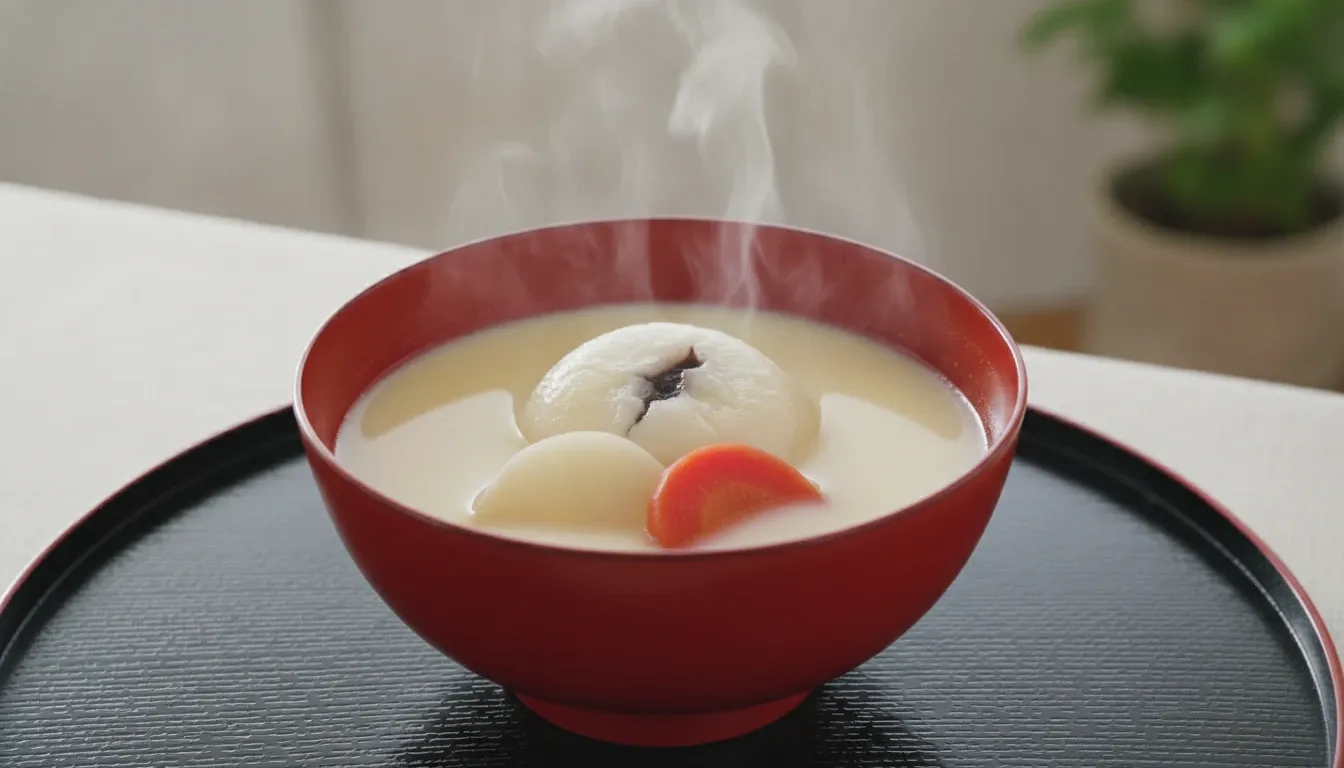
Anmochi zoni, a sweet New Year soup
Sanuki has its own ozoni, quite unlike others: anmochi zoni (あんもち雑煮).
What goes into anmochi zoni
| Ingredient | Role |
|---|---|
| Sanuki white miso broth | The base (sweet) |
| Round rice cakes filled with sweet red bean paste | The star |
| Daikon, carrot, leafy greens | The vegetables |
| Iriko dashi | The stock |
Iriko dashi is stock made from small dried sardines. Daikon is a large, mild white radish.
Why the rice cakes are filled with bean paste
The custom goes back to the Edo period, under the shoguns, when sugar was precious. Sanuki was famous for wasanbon, a fine, delicate Japanese sugar. Using plenty of sugar on the special day of New Year was a luxury. The sweet bean paste, the sweet white miso, and the chewy rice cake come together into one dish.
How to use it in cooking
| Dish | Fit | How to use it |
|---|---|---|
| Anmochi zoni | Best | Sanuki’s New Year tradition |
| White miso ozoni in general | Best | Interchangeable with the Kyoto style |
| Saikyo-zuke | Best | Interchangeable with Saikyo miso |
| Shira-ae | Good | A refined finish |
| Vinegar-miso and mustard vinegar-miso | Good | Dressings such as scallions in vinegar-miso |
| White dengaku | Good | Work it with mirin and sugar |
| Long simmers | Avoid | Not suited |
Saikyo-zuke is fish cured in sweet miso. Shira-ae is a tofu dressing. Dengaku is tofu or vegetables grilled with a sweet miso glaze, and mirin is a sweet rice seasoning for cooking.
How to choose a good jar
| Check | A good Sanuki white miso | Avoid |
|---|---|---|
| Ingredients | Soybeans, rice, and salt only | Sugar, starch syrup, flavor enhancers |
| How it is made | Fully brewed, naturally brewed | Heat-accelerated |
| Region | Kagawa Prefecture, Shikoku | No region given |
Long-established makers in Kagawa, such as Yamahisa and Kawanishi Miso, are a safe choice.
How to store it
| State | Where | How long |
|---|---|---|
| Unopened | Refrigerator recommended | Until the best-before date |
| Opened | Refrigerator, always | Within 1 month |
Sanuki white miso is low in salt, so keep it in the refrigerator.
When to reach for Sanuki white miso
Sanuki white miso stands for the food culture of Sanuki on Shikoku, and above all for anmochi zoni. It is interchangeable with Saikyo miso and works in any recipe that calls for sweet white miso. Where a recipe means the saltier Shinshu type, it will come out much sweeter.
How to buy it:
- Choose a jar whose ingredients are soybeans, rice, and salt only
- Buy from a long-established maker in Kagawa
- Keep it refrigerated once opened, and use it within 1 month
How it divides the work with other miso:
- Everyday use: Shinshu miso, a light-colored, all-purpose rice miso
- Kyoto-style white miso: Saikyo miso
- Sanuki’s own tradition: Sanuki white miso
- Richness and simmering: Hatcho miso
Next to Saikyo miso, it is the other great white miso, and a way to taste a regional food culture. Reach for it when you want to try anmochi zoni.
Sources
- Miso Health Promotion Committee (Japan Federation of Miso Manufacturers Cooperatives). Official miso site: how rice, barley, and soybean miso are classified and made (in Japanese)
- Japan Federation of Miso Manufacturers Cooperatives. Miso production by type and regional character (in Japanese)
- America's Test Kitchen. All about miso: a supermarket taste test in which both a sweet Saikyo miso and a Shinshu miso are sold as white miso