What this article answers
- What Hatcho miso is
- A soybean miso from Okazaki, central Japan. Only soybeans and salt, aged 2–3 years under stones
- Where it works best
- Long simmers, miso nikomi udon, doteni, miso katsu sauce, and red dengaku glaze
- Where it does not work
- Raw dishes and delicate white fish. It is too astringent and too heavy
- How to buy it
- Ingredients: soybeans and salt only. Akadashi miso is a blend, not pure Hatcho
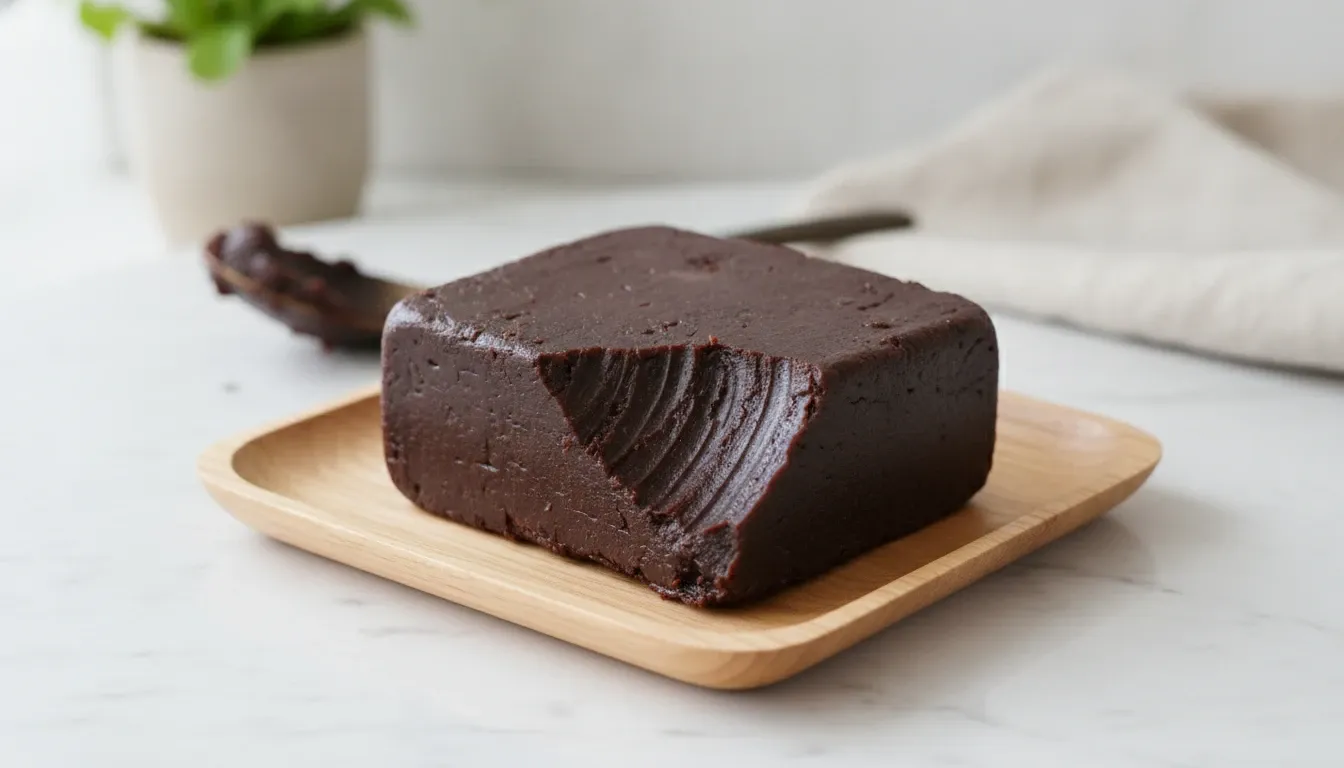
Hatcho miso is a soybean miso from Okazaki, a city in Aichi Prefecture in central Japan. It uses no rice and no barley, only soybeans and salt. It ages for 2–3 years under a pile of stones. The result is a deep red-brown paste with strong umami and a noticeable astringency.
Miso ferments with koji, grain or beans cultured with a mold. Most miso uses rice or barley koji. Hatcho miso grows the koji on the soybeans themselves. It is the backbone of the miso dishes of Nagoya and the surrounding region: miso nikomi udon (udon noodles simmered in miso broth), miso katsu (pork cutlet with miso sauce), and doteni (beef tendon simmered in miso).
What sets Hatcho miso apart
The basics
| Item | Details |
|---|---|
| Type | Soybean miso, red and salty |
| Color | Deep red-brown to near black |
| Salt | About 10–11% |
| Koji | Soybean koji (mold grown directly on the soybeans) |
| Fermentation | 2–3 years, among the longest of any miso |
| Main region | Okazaki, Aichi Prefecture (the Hatcho district) |
| Leading makers | Hatcho Miso Co. (Kakukyu) and Maruya Hatcho Miso |
| Other names | Sanshu miso, Okazaki miso (in the broad sense) |
Where it sits among miso
Hatcho miso is the richest and most distinctive of all miso. Its ingredients and method differ so much from rice and barley miso that it tastes and smells like a different product.
Around Nagoya, it is an everyday miso. Miso nikomi udon, miso katsu, and red miso soup all assume it, and a whole regional cuisine grew around it.
Ingredients and how it is made
What goes in
Hatcho miso is about as simple as miso gets: soybeans and salt. No rice, no barley.
| Ingredient | Share | Role |
|---|---|---|
| Soybeans | 100% | The protein, the base for the koji, all of the umami |
| Salt | About 10–11% | Keeping quality, a defined taste |
| Water | As needed | For mixing |
Four steps that differ from other miso
| Step | What Hatcho miso does | How other miso differ |
|---|---|---|
| 1. Miso balls | Steamed soybeans are squeezed into balls | Rice miso simply mashes the soybeans |
| 2. Soybean koji | Koji mold is grown on the surface of the balls | Rice miso grows koji on rice, barley miso on barley |
| 3. Packing | Only soybean koji, salt, and water go into large cedar vats | Other miso mix in koji made separately |
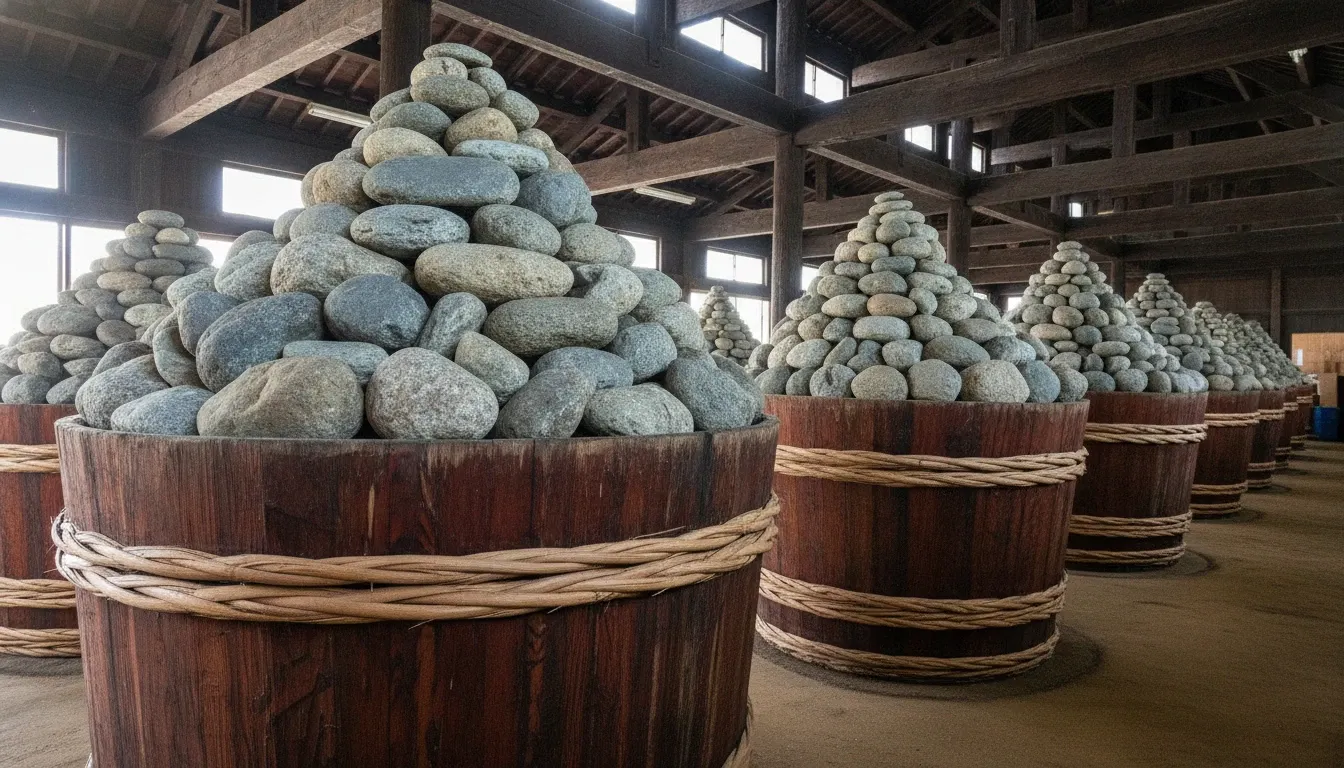
| 4. Aging | Aged under stones weighing several hundred kg to several tonnes, for at least two summers and two winters | Other miso use no stones and age for less time |
How Hatcho miso behaves under heat is covered in miso and heat.
How it tastes and smells
The parts of the taste
| Element | Strength | Where it comes from |
|---|---|---|
| Umami | Very strong | Free amino acids, especially glutamic acid, from long breakdown of soybean protein |
| Saltiness | Moderate | About 10–11%, middle of the range for red miso |
| Sweetness | Very weak | No rice koji, so almost no sugar |
| Sourness | Moderate | Organic acids from long aging |
| Bitterness and astringency | Strong | Tannins, melanoidins, and other products of long fermentation |
The aroma
The aroma of Hatcho miso is heavy and complex. Long aging creates aroma compounds such as dimethylpyrazine, pyrroles, and furfurals. Together they give a deep smell that recalls coffee or chocolate.
It has none of the bright, fruity aroma of rice miso. The aroma sinks rather than lifts, and it gives a dish a weight at its base.
How to use it in cooking
Where it fits
| Dish | Fit | How to use it |
|---|---|---|
| Miso nikomi udon (udon simmered in miso broth) | Best | Blend Hatcho with another red miso and simmer long |
| Doteni (beef tendon simmered in miso) | Best | Simmer daikon radish and beef tendon in miso for 2–3 hours |
| Miso katsu (pork cutlet with miso sauce) | Best | Miso, sugar, mirin, and dashi make a sweet-salty sauce |
| Red dengaku glaze | Best | Work it together with mirin and sugar |
| Akadashi (dark red miso soup) | Good | Blend with a light rice miso. Alone it is heavy |
| Miso-simmered oily fish | Good | Stands up to the strong smell of mackerel and sardine |
| The first addition in a long simmer | Good | Builds the base. Finish with a more fragrant miso |
| Raw uses (such as on chilled tofu) | Avoid | Too astringent to eat raw |
| Shira-ae (tofu dressing) and delicate dishes | Avoid | Color, taste, and aroma are all too strong |
Mirin is a sweet rice seasoning for cooking. Dashi is Japanese soup stock, usually from kombu and dried bonito. Dengaku is tofu, eggplant, or konjac grilled with a sweet miso glaze.
The food science behind it
Three traits explain why Hatcho miso dominates long-simmered dishes.
| Trait | Effect |
|---|---|
| A large amount of amino acids | The umami stays thick through long simmering, and the flavor lasts to the end |
| Tannins and polyphenols | Bind with odor compounds in meat and fish and hold back off smells |
| Plenty of melanoidins | The Maillard reaction has already run during aging. Even when heat darkens it further, the balance of flavor holds |
Foods that pair well
The best matches
| Category | Foods | Effect |
|---|---|---|
| Red meat | Beef tendon, pork belly, offal | Animal fat and the miso’s richness build on each other |
| Oily fish | Mackerel, sardine, yellowtail | The astringency of Hatcho miso tames the fishy smell |
| Root vegetables | Daikon radish, konjac, taro | Hold their shape through long simmering and soak up flavor |
| Udon | Raw udon (for miso nikomi) | Hatcho is essential, since its aroma survives the simmer |
| Eggs | Soft-boiled or marinated eggs | Soak them in doteni broth |
| Sweet seasonings | Sugar, mirin | Sweetness softens the astringency |
Konjac is a firm, almost flavorless jelly made from a tuber.
Poor matches
- Delicate white fish: it gets lost under the weight of Hatcho miso. A sweet white miso such as Saikyo miso suits it better
- Raw vegetable salads: the astringency and the color make it a poor fit for raw food
- Dairy: with cheese and the like, Shinshu miso, a light-colored rice miso, pairs better
How to choose a good jar
What to check on the label
| Check | A good Hatcho miso | Avoid |
|---|---|---|
| Ingredients | Soybeans and salt only | Rice, barley, flavor enhancers, caramel color |
| How it is made | Naturally brewed, wooden vats, at least two summers and two winters | Heat-accelerated |
| Soybeans | Japanese-grown (higher quality) | Not stated |
| Maker | One of the two old Okazaki houses (Kakukyu or Maruya), or a trusted soybean miso maker | All-purpose jars labeled “akadashi miso” |
Imported jars usually keep the Japanese words: 八丁味噌 (Hatcho miso), 天然醸造 (naturally brewed), and 二夏二冬 (“two summers, two winters”).
Akadashi miso is not Hatcho miso
Most miso sold as akadashi is a blend: Hatcho-style soybean miso mixed with rice or barley miso. It is made to be easy to cook with, and it is a different product from pure Hatcho miso.
| Type | Character | Use |
|---|---|---|
| Pure Hatcho miso | Soybeans only, strong astringency and richness | Long simmers, dengaku, miso katsu |
| Akadashi miso | Hatcho miso plus rice miso, easy to use | Everyday akadashi miso soup |
If you want what only Hatcho miso can do, buy the pure miso and set the blend ratio yourself. Ratios for each dish are in awase miso.
How to store it
| State | Where | How long |
|---|---|---|
| Unopened | A cool, dark place (or the refrigerator) | Until the best-before date |
| Opened | Refrigerator | 6 months to 1 year (longer than other miso) |
| Long term | The refrigerator is enough | 1 year or more |
Hatcho miso is high in salt and protein and low in water activity. It keeps far better than other miso. It was built to survive 2–3 years of aging, so its quality falls only slowly after opening.
When to reach for Hatcho miso
Hatcho miso is a specialist. It is too heavy for everyday miso soup. But some dishes only work with it: miso nikomi udon, doteni, miso katsu, and dengaku.
How to buy it:
- For pure Hatcho miso, choose one of the two old Okazaki houses, Kakukyu or Maruya
- Treat akadashi miso as a different product
- Use it where it shines: long simmers, dengaku, and miso katsu
How it divides the work with other miso:
- Everyday miso soup and all-purpose use: Shinshu miso
- Curing beds and refined sweetness: Saikyo miso, a sweet, pale rice miso from Kyoto
- Simmering, richness, and astringency: Hatcho miso
With Hatcho miso on the shelf, you can make far more miso dishes. Holding both extremes, red and white, is how professional kitchens get the most out of miso. How to read any miso label is in how to choose Japanese miso.