What this article answers
- What ming you does
- Three things at once: gloss, aroma, and keeping the dish warm
- Which oil to use
- Chicken fat is the all-rounder. For fish or vegetarian dishes, use scallion oil or shu you
- How much per serving
- 2.5–5 ml for a stir-fry, 2–3 ml for soup, 5 ml for a sauced dish, 5–15 ml for a steamed dish
- When it goes in
- At the very end of cooking. For a stir-fry, drizzle it around the hot wall of the wok
- Making chicken fat at home
- Render 200 g of chicken skin over low heat for about 20 minutes, add scallion and ginger, then strain
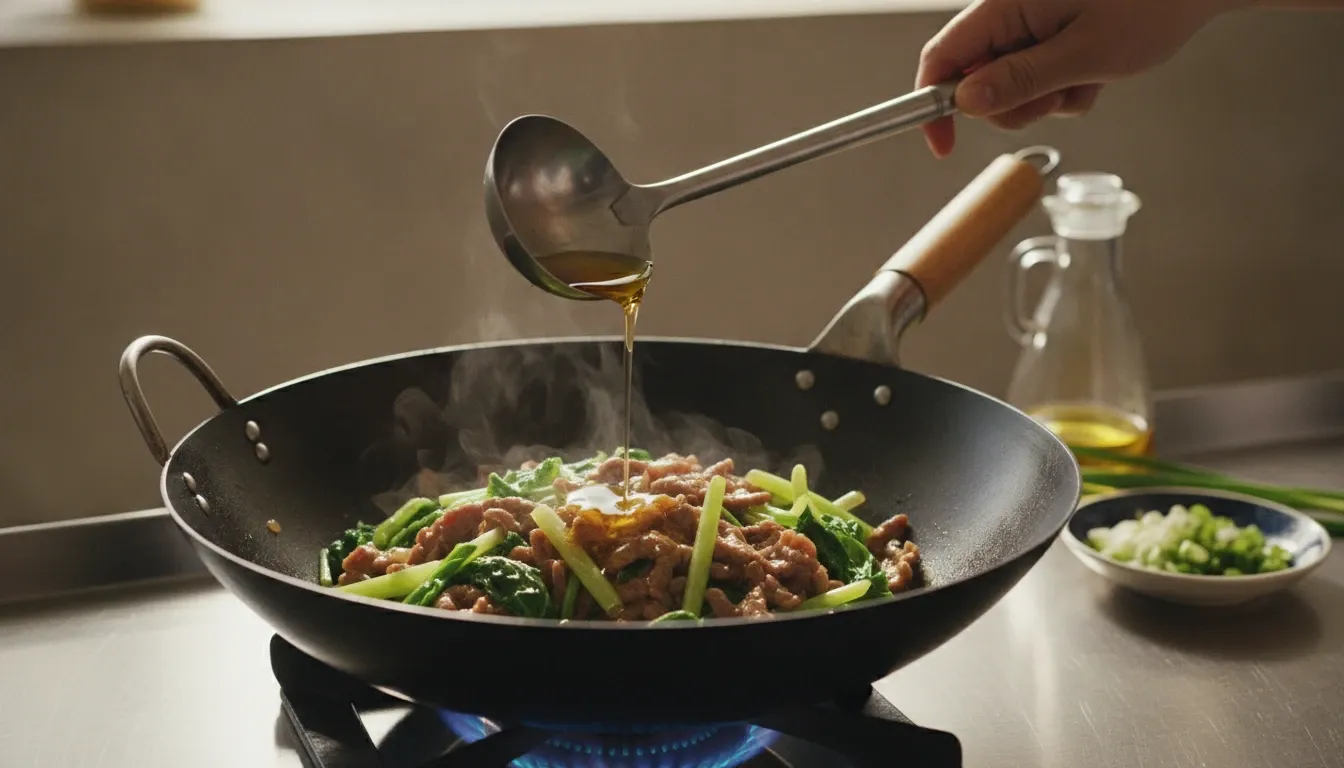
In a Chinese kitchen, at the last moment of a stir-fry or a soup, the cook drizzles a little oil down the side of the wok. This finishing touch is called ming you (明油, “bright oil”).
“Bright” here means glossy. A few drops of oil give the dish shine, aroma and warmth all at once. It is a quiet step with a large effect.
Three things ming you does
Ming you is often taken for a purely cosmetic touch. In fact it does three separate jobs.
| Effect | How it works | What you notice |
|---|---|---|
| Gloss | A film of oil covers the surface and reflects light | Colors look brighter, and the dish looks more appetizing |
| Aroma | Fat-soluble aroma compounds replace what heat drove off | The aroma lasts after plating |
| Warmth | The film of oil slows the escape of steam, so the food cools more slowly | The dish is still hot when it reaches the table |
Gloss
Chinese dishes go from wok to table fast, so the first impression counts. The film of oil gives an even shine to the surface of a sauced dish or to each piece in a stir-fry, and makes the colors brighter.
When Chinese cooks judge a dish by color, aroma, taste and shape, this gloss counts toward color (color, aroma, taste and shape).
Aroma
While a stir-fry or soup cooks, heat drives off some of the aroma compounds in the ingredients and seasonings. A splash of flavored oil at the end puts that aroma back at the last moment. The effect is strongest with scallion oil or garlic oil.
Warmth
A film of oil covers the surface of the food and holds back evaporation. Evaporating water takes heat from the food as it goes. By cutting evaporation, the film slows the loss of heat.
The difference is clearest in soups and sauced dishes. A thin film of oil on top makes them noticeably hotter when served.
Which oil to use
The oil you choose changes how the dish comes across. Pick one that suits where the dish is headed.
| Oil | Character | Best for |
|---|---|---|
| Chicken fat (ji you, 鸡油) | Savory depth from the meat. The most common choice | Soups, sauced dishes, fried rice, steamed dishes |
| Scallion oil | Sweet scallion aroma | Steamed fish, dressed dishes, fried rice |
| Garlic oil | Rich, savory garlic | Stir-fries, dumpling dipping sauces |
| Sichuan pepper oil | Citrusy and numbing | Numbing-hot (mala) Sichuan dishes, cold dishes |
| Toasted sesame oil | Strongly roasted | Soups, dressed dishes, dumpling dipping sauces |
| Shu you | Clean, with no off-flavors | Dishes where the ingredients’ own flavor should lead |
| Chili oil | Heat and a bright red | Finishing mapo tofu or dan dan noodles |
Why chicken fat is the usual choice
In Chinese kitchens, chicken fat is so much the standard that ming you and chicken fat are almost the same word.
- Strong savoriness. It carries the savory compounds of the meat and adds depth to a dish
- A gentle aroma. It stays in the background and lifts the flavor without getting in the way
- Richness. It has a rounder mouthfeel than vegetable oil
- A fine gloss. It is semi-solid at room temperature, so it forms an even film on the surface of hot food
How to make chicken fat
Chicken fat is the heart of ming you. You can buy it, but homemade smells far better.
Ingredients
| Ingredient | Amount | Notes |
|---|---|---|
| Chicken skin | 200 g | From thighs or breasts. Fatty trimmings work too |
| Green scallion tops | Two 10 cm (4 in) lengths | Add sweetness and aroma |
| Ginger | 3 slices | Takes away the raw chicken smell |
Steps
- Cut the skin small. Pieces 2–3 cm (¾–1¼ in) square release fat more easily
- Heat slowly over low heat. Put the skin in the pan and let it cook off its water while the fat melts out, about 20 minutes
- Add the scallion and ginger once the skin starts to crisp
- Cook 5–10 minutes more. Turn off the heat when the scallion has softened and its aroma has gone into the fat
- Strain through a fine sieve into a clean jar
Storage: Chinese cooks keep it 2–3 months in the refrigerator. It turns semi-solid when cold, but melts at once on hot food. US extension guidance for homemade oils flavored with fresh vegetables or herbs is stricter: up to 4 days in the refrigerator, or freeze it in small portions.
The leftover skin: the crisp pieces make a good snack with a pinch of salt.
When to add it, and how much
When it goes in
| Timing | What happens |
|---|---|
| Right after the heat goes off | For stir-fries. Residual heat blends the oil in |
| Just before plating | For soups and sauced dishes. Add it in the pot just before serving up |
| After plating | For steamed dishes. Pour it straight over the finished food |
All three come at the very end of cooking. Ming you is also the signal to turn off the heat.
How much to use
| Dish | Per serving |
|---|---|
| Stir-fry | 2.5–5 ml (½–1 tsp) |
| Soup | 2–3 ml (½ tsp) |
| Sauced dish | 5 ml (1 tsp) |
| Steamed dish | 5–15 ml (1 tsp to 1 tbsp) |
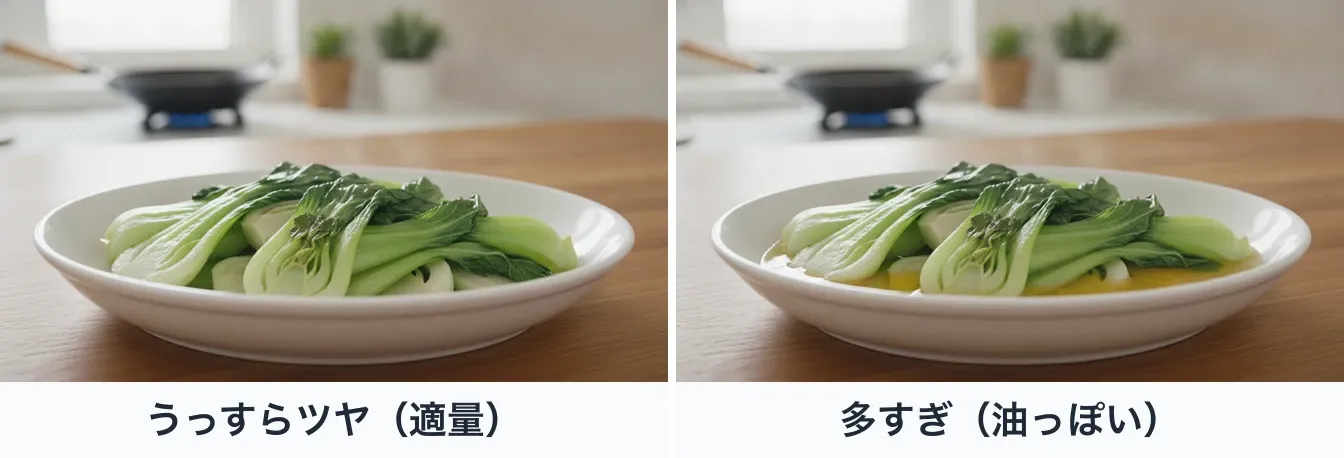
Use a little. Too much makes the dish greasy and undoes the point. Start small, and stop when a faint shine appears.
Down the wok wall, or straight on the food
| Method | What it does | When to use it |
|---|---|---|
| Down the wok wall | The hot metal warms the oil for a moment, and its aroma rises | Finishing a stir-fry |
| Straight on the food | The oil spreads evenly over the surface | Soups, steamed dishes, after plating |
For a stir-fry, professionals don’t pour the oil onto the food. They drizzle it in a ring around the wall of the wok. The hot metal warms the oil for an instant, and the aroma lifts even more. In a flat frying pan on an electric or induction hob, drizzle it around the hot edge of the pan.
How to use it, dish by dish
Stir-fries
Right after the seasonings coat the food over the final high heat, drizzle scallion oil or chicken fat down the wall of the wok. For dishes finished with a sauce premixed in a bowl, ming you comes after that sauce has thickened (Chinese bowl sauces). Toss the wok at once to coat everything, and plate.
Soups and sauced dishes
Once the soup is in the bowl, add a few drops of sesame oil or chicken fat to the surface. A thin film of oil forms on top, keeping the soup hot and adding aroma.
For a sauced dish, add the oil in the pan after the sauce has thickened. Give it one big stir, then plate.
Steamed dishes
Steamed fish (qing zheng yu) is where ming you shines most. Top the steamed fish with fine shreds of scallion, then pour hot scallion oil over them so it sizzles. The scallion aroma bursts up at that moment, and the fish turns glossy.
Braised dishes
At the end of a red-braise (hong shao, simmered in soy sauce) or a braised vegetable dish, add a little chicken fat or sesame oil. The fresh aroma of the oil gives an accent to the deep flavor of the braise.
Common failures and fixes
A greasy dish and a clashing flavor can be only partly saved. Weak aroma and separated oil can be fully fixed.
| Problem | Cause | Fix it now | Prevent it next time |
|---|---|---|---|
| The dish is greasy | Too much oil for the surface of the food, so it sits on top as a film instead of blending in | Tilt the plate or pan to pour off the excess, and add a little acid or salt to sharpen the flavor | Start with 2.5 ml (½ tsp), and stop as soon as it shines |
| The aroma is weak | A neutral oil was used, so it had no aroma compounds to give | Add a little flavored oil for gloss and aroma | Choose a flavored oil that suits the dish |
| The oil separates and floats | The gap between cold oil and hot food kept the oil from thinning out, so it separated and rose to the top | Reheat the dish and toss the pan to work the oil in | Bring the oil to room temperature first. Chicken fat sets when cold |
| The flavor goes the wrong way | The aroma of the oil clashed with the direction of the dish, and the flavor lost its shape | Redraw the outline with acid or spice, or switch oils next time | Choose an oil that suits the dish. When unsure, use shu you |
Three points to remember
Ming you is the last small step that changes how a Chinese dish turns out.
What to keep in mind
- Three effects: gloss, aroma and warmth, all from a few drops
- Choose the oil: chicken fat works almost anywhere, but match a flavored oil to the dish
- Use a little: too much makes the dish greasy. A faint shine is right
Clean the oil with shu you, load it with aroma as flavored oil, and finish with ming you. Those three stages are the whole of how Chinese cooking uses oil.
Sources
- Dunlop, Fuchsia. (2003). Land of Plenty: A Treasury of Authentic Sichuan Cooking (US edition of Sichuan Cookery, 2001). On the traditional use of ming you in Chinese cooking
- McGee, Harold. (2004). On Food and Cooking. On how a film of oil keeps food warm, and on the chemistry of aroma compounds
- Oregon State University Extension Service. Herbs and vegetables in oil (SP 50-701, revised January 2025). On storing homemade flavored oils