What this article answers
- What mugi miso is
- Miso made with barley koji instead of rice koji. Salt about 9–11%, aged 3–6 months
- How it tastes
- Sweet and light, with a toasty barley aroma and almost no astringency
- Where it works best
- Hiyajiru (chilled miso soup), everyday miso soup, vinegar-miso, and miso-cured pork
- Where it does not work
- Long simmers. Its aroma leaves the pot quickly
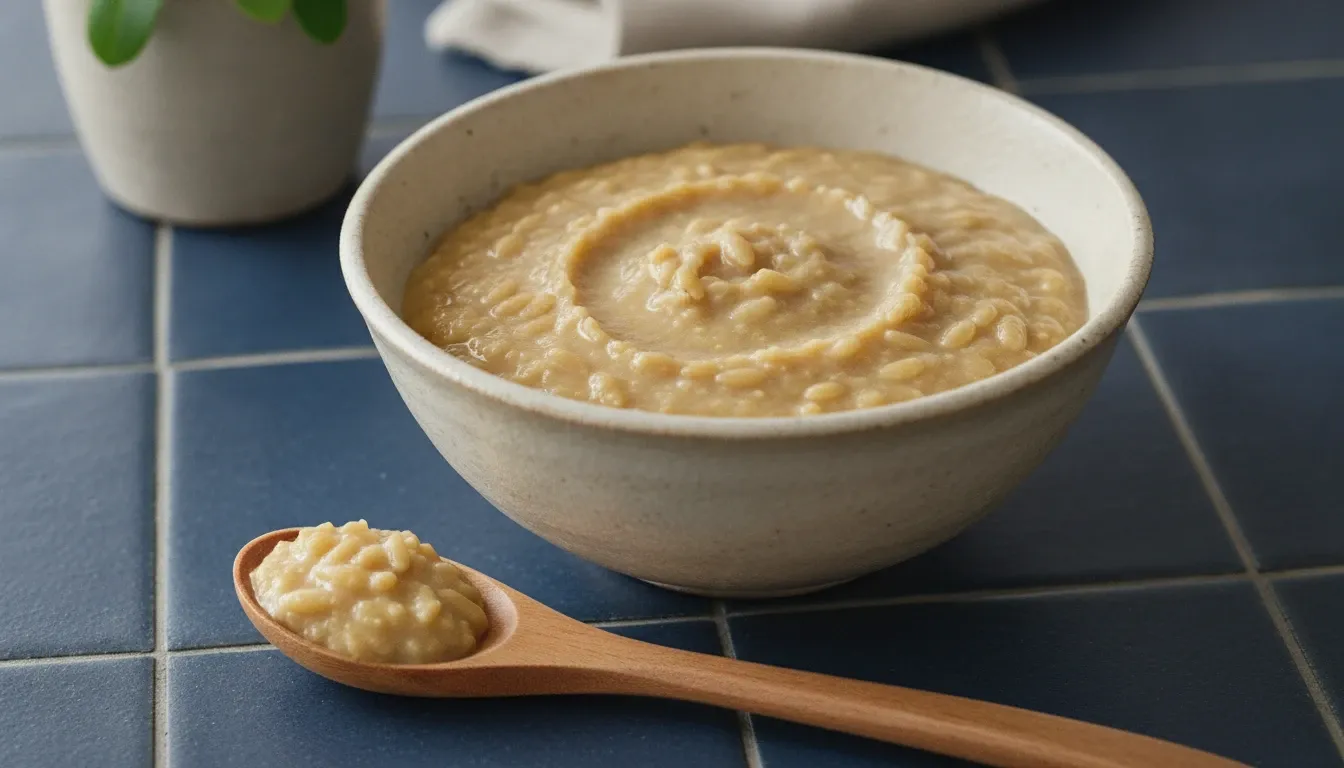
Mugi miso is miso made with barley koji instead of rice koji. Koji is grain or beans cultured with a mold that drives the fermentation. Mugi miso grew up in Kyushu, Shikoku, and the Chugoku region, in western Japan.
It is lower in salt than rice miso, with a clean barley aroma and a gentle sweetness. Japanese cooks also call it inaka miso, “country miso.” It carries dishes that rice miso handles poorly, such as hiyajiru (chilled miso soup), everyday barley miso soup, and vinegar-miso dressings.
Barley miso comes in more than one style. Many English-language guides describe it as darker and saltier, fermented for a year or more. This article covers the light, sweet style of Kyushu and Shikoku. On a jar, look for a pale color and a short ingredient list of soybeans, barley, and salt.
What sets mugi miso apart
The basics
| Item | Details |
|---|---|
| Type | Barley miso, sweet to medium-salty |
| Color | Pale yellow to light brown |
| Salt | About 9–11% (lower than rice miso) |
| Koji ratio | 15–20 (high) |
| Fermentation | 3–6 months |
| Main regions | Oita, Saga, Fukuoka, Kumamoto, Ehime, Yamaguchi, Hiroshima |
| Leading makers | Fundokin (Oita), Yamauchi Honten (Saga), Shinjo Miso (Fukuoka) |
| Other names | Inaka miso, mugi miso |
The koji ratio is the weight of rice or barley for every 10 parts of soybeans by weight. A higher number means more koji, more sweetness, and a faster ferment.
Where it sits among miso
Mugi miso stands for the miso culture of western Japan, centered on Kyushu and Shikoku. Rice miso spread across Japan in the modern era. In these regions, mugi miso stayed the everyday miso. It still makes up about 3–4% of Japan’s miso production.
The name “country miso” came in modern times, as rice miso spread from the big cities. Rice miso came to mean the city, and barley miso the countryside. Barley miso was originally the main miso of western Japan.
Ingredients and how it is made
What goes in
| Ingredient | Share | Role |
|---|---|---|
| Soybeans | 100% (the base amount) | The protein |
| Barley koji (barley or naked barley) | Koji ratio 15–20 | Sugar and aroma from the barley |
| Salt | About 9–11% | Keeping quality, a defined taste |
Naked barley is a variety whose husk comes off easily.
How it is made
| Step | What happens |
|---|---|
| 1. Soybeans | The soybeans are steamed (or boiled) |
| 2. Barley koji | Koji mold is grown on steamed barley or naked barley (more aromatic than rice koji) |
| 3. Mixing | Soybeans, barley koji, and salt are mixed |
| 4. Fermenting and aging | 3–6 months (shorter than rice miso) |
How mugi miso behaves under heat is covered in miso and heat.
How it tastes and smells
The parts of the taste
| Element | Strength | Where it comes from |
|---|---|---|
| Umami | Strong | Amino acids from soybeans and barley koji |
| Saltiness | Moderate | Restrained, at 9–11% |
| Sweetness | Strong | Sugars from barley koji (a more complex sweetness than rice koji) |
| Sourness | Weak | Gentle, from the short aging |
| Bitterness and astringency | Very weak | Almost none |
The aroma
Mugi miso smells of toasted barley over a sweet fermented note. Vanillin, ferulic acid, and phenolic aroma compounds give it a flavor rice miso does not have.
People describe it as fragrant and cleanly sweet. Cooks who find rice miso and red miso too heavy tend to like it.
How to use it in cooking
Where it fits
| Dish | Fit | How to use it |
|---|---|---|
| Hiyajiru (Miyazaki and Ehime) | Best | A regional dish that only works with mugi miso |
| Barley miso soup | Best | The everyday breakfast miso soup across western Japan |
| Vinegar-miso and mustard-miso | Good | Its sweetness comes through |
| Miso-cured pork | Good | The barley aroma passes to the meat |
| Dengaku (sweet glaze) | Good | Sweet even with little mirin |
| Miso-grilled dishes | Usable | Watch for burning |
| Long simmers | Weak | Its aroma leaves quickly |
Dengaku is tofu, eggplant, or konjac grilled with a sweet miso glaze. Mirin is a sweet rice seasoning for cooking.
Why hiyajiru needs mugi miso
Hiyajiru is a regional dish of mugi miso, grilled fish, cucumber, shiso (a Japanese herb of the mint family), and cold water. There are clear reasons it only works with mugi miso.
| Element | What mugi miso brings | Effect in hiyajiru |
|---|---|---|
| The cold | Low salt (9–11%), so the taste still stands out when thinned with cold water | Umami and salt stay in balance even when cold |
| Sweetness | Natural sweetness from barley koji | Sweet without added sugar |
| Aroma | The ferulic-acid aroma comes through even cold | Chilling does not mute the aroma |
Make hiyajiru with rice miso, especially a salty one such as Shinshu or Sendai, and the taste goes flat in the cold water. Low salt, sweetness, and an aroma that survives the cold are what the dish is built on.
Foods that pair well
| Category | Foods | Effect |
|---|---|---|
| Cucumber | Raw or lightly pickled | Hiyajiru, cucumber with a dab of miso |
| White fish | Sea bream, pike conger, horse mackerel | The fish in hiyajiru, miso-cured fish |
| Pork | Pork loin | Cured in mugi miso |
| Vegetables | Wakame seaweed, tofu, eggplant | Classic barley miso soup |
| Aromatics | Shiso, sesame, ginger | Toppings for hiyajiru |
How to choose a good jar
| Check | A good mugi miso | Avoid |
|---|---|---|
| Ingredients | Soybeans, barley (or naked barley), and salt only | Sugar, flavor enhancers (such as MSG) |
| How it is made | Fully brewed, naturally brewed | Heat-accelerated |
| Type of barley | Naked barley (more aromatic) or barley | Not stated |
| Region | Kyushu (Oita, Fukuoka, Saga), Shikoku (Ehime) | — |
How to store it
| State | Where | How long |
|---|---|---|
| Unopened | A cool, dark place | Until the best-before date |
| Opened | Refrigerator | 3–6 months |
| Long term | Freezer | About 6 months |
It is lower in salt, so it keeps less well than rice miso. Once opened, use it up quickly.
When to reach for mugi miso
Mugi miso is the seasoning that makes hiyajiru and barley miso soup possible. It suits cooks who find rice miso heavy, or who want a light, sweet miso.
How to buy it:
- Choose a jar whose ingredients are soybeans, barley, and salt only
- Look for a real mugi miso from Kyushu or Shikoku
- For hiyajiru, naked-barley miso is ideal
How it divides the work with other miso:
- Everyday, all-purpose miso: Shinshu miso
- Curing beds and refined sweetness: Saikyo miso, a sweet, pale rice miso from Kyoto
- Heavy richness: Hatcho miso
- Light sweetness and cold dishes: mugi miso
With mugi miso on the shelf, your miso cooking reaches into the traditions of western Japan. It is the only way to make hiyajiru taste the way it does where it comes from. To blend it with other miso, see awase miso.