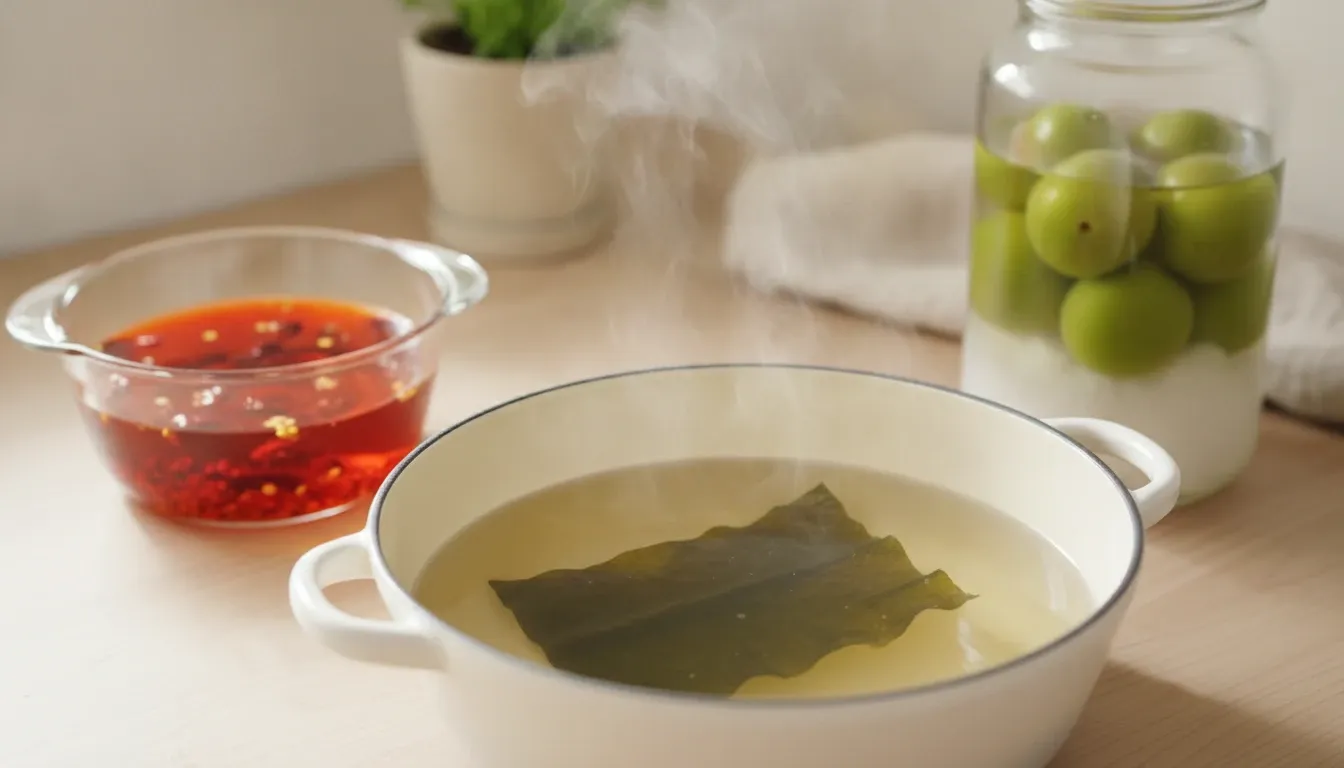
What this article answers
- What makes one extraction differ from another
- What you extract into (the solvent). It narrows what comes out and which methods you can use
- Extracting aroma
- Use oil or alcohol. Most aroma compounds are fat-soluble and barely dissolve in water
- The upside and the limit of alcohol
- It takes up both water- and fat-soluble compounds, but you cannot heat it
- How sugar differs from the other solvents
- It brings no solvent. It draws water out of the ingredient, and that water becomes the liquid
Stock, flavored oil, fruit liqueur, fruit vinegar. They look like separate techniques.
All of them move compounds from an ingredient into a liquid. The only difference is what you extract into.
Extraction starts with choosing a solvent
| What you extract into | Typical techniques | What comes out |
|---|---|---|
| Water | Dashi (Japanese stock from kombu and dried bonito), fond, bouillon, Chinese stock | Umami, gelatin |
| Oil | Flavored oil, chili oil | Aroma, heat |
| Alcohol | Fruit liqueur, herb spirits | Acidity, sugar, aroma |
| Vinegar | Fruit vinegar, herb vinegar | Acidity, aroma |
| Sugar | Ume syrup (from a sour Japanese apricot), fruit syrups | The fruit’s water-soluble compounds |
Choosing the solvent narrows two things: what you can extract, and which methods you can use.
Sugar is the odd one out. You don’t supply a solvent; the sugar draws water out of the ingredient, and that water becomes the solvent. So it can’t be compared on the same axes as the other four. The last section deals with it.
Let’s take them in turn.
What each solvent can dissolve
| Solvent | What comes out |
|---|---|
| Water | Water-soluble compounds (umami, acids, sugars, pigments, gelatin) |
| Oil | Fat-soluble compounds (aroma compounds, pungent compounds) |
| Alcohol | Both |
| Vinegar | Water-soluble compounds, plus what dissolves in acid |
Most aroma compounds are fat-soluble and barely dissolve in water: terpenes, aldehydes, phenols, and others. So if you want aroma, choose oil or alcohol.
Only alcohol reaches both. It is a mixture of water and ethanol, so it sits in between. The strength of the alcohol sets the balance.
Vinegar reaches what dissolves in acid. The main example is calcium. It is why fish bones soften enough to eat in nanbanzuke, the Japanese dish of fried fish marinated in vinegar.
This sets the order of decisions. First decide whether what you want is water-soluble or fat-soluble. That narrows the solvent.
Which solvents you can heat
| Solvent | Boiling point of the main component | Can you heat it? |
|---|---|---|
| Water | 100°C (212°F) | Yes |
| Oil | 200°C (392°F) and above | Yes |
| Alcohol | 78.4°C (173°F) (ethanol) | No |
| Vinegar | 118°C (244°F) (acetic acid) | Yes |
The dividing line is whether the solvent boils off before water does. Only alcohol boils lower than water, so warming it loses the solvent itself.
That changes which methods you can use. Pouring a hot solvent over the ingredient works with water (pouring on hot water), oil (pouring very hot oil over spices, as for chili oil), and vinegar (warming it, then steeping for 24 hours). It doesn’t work with alcohol.
Since alcohol can’t use heat, it extracts slowly at room temperature. That is why herb spirits take 3 days to 1 month.
Temperature also changes what comes out, not only how fast. In water, low temperatures give umami, and high temperatures over long hours give gelatin, as in fond. So copying the time alone won’t reproduce a result.
The ingredient decides when to stop
Once you have chosen the solvent, the ingredient sets the method.
| Ingredients | What you do | |
|---|---|---|
| Lifting out | Kombu (dried kelp), katsuobushi (dried bonito), herbs, citrus peel | Stop once the compound you want is out |
| Simmering out | Bones, meat | Draw out everything you can |
What decides it is where the compound sits. Compounds near the surface, like the aroma of herbs, come out fast. Compounds deep inside, like the acidity in fruit flesh or the gelatin in bones, take time.
And among the techniques you lift out, the reasons to stop differ.
| Technique | Why you lift it out | If you leave it in |
|---|---|---|
| Herb spirits | The flavor gets worse | Bitterness comes out |
| Fruit vinegar | It spoils | Mold grows |
| Herb vinegar | It looks worse | It turns cloudy |
Fruit liqueur, by contrast, doesn’t need the fruit lifted out. The alcohol also preserves it, so it keeps improving as it ages.
Each extract is used differently
| Solvent | Extract | How you use it |
|---|---|---|
| Water | Dashi, fond | The main liquid of the dish |
| Oil | Flavored oil | Drizzle it or fry in it (it is a cooking medium itself) |
| Alcohol | Liqueurs, fruit liqueur | Drink it as it is |
| Vinegar | Fruit vinegar, herb vinegar | Never used at full strength |
Vinegar is the only one you dilute, because an acidity of 3–5% is too strong to use straight. That frees you to make it strong.
Water is the opposite: it has to match a strength you can drink. That is why you measure the kombu and the time.
So the solvent decides not only what you extract, but how you use it afterward.
Extraction and odor removal are one process
The physics of moving compounds into a liquid serves two goals: drawing out what you want, and removing what you don’t.
| Solvent | Drawing out | Removing |
|---|---|---|
| Water | Dashi | Blanching (move the odor into hot water and discard it) |
| Vinegar | Fruit vinegar | Rinsing in acid |
| Alcohol | Fruit liqueur | Washing in alcohol |
| Oil | Flavored oil | No matching technique |
Only oil is missing. That is no accident of technique; the nature of the odor compounds explains it.
Why oil can’t remove odors
Odors come in two types with different properties, and oil handles neither.
| Odor type | Property | Where it sits | What to do |
|---|---|---|---|
| Fishy smell (trimethylamine, ammonia) | Water-soluble, alkaline | In the water of the flesh | Rinse with water, neutralize with acid, drive off with alcohol |
| Gamy smell (branched-chain fatty acids) | Fat-soluble | In the fat | Trim the fat |
The first is a polarity mismatch. Trimethylamine and ammonia are water-soluble and alkaline, so water, vinegar, and alcohol reach them. They don’t dissolve in oil.
The second fails for the opposite reason. The smell of lamb comes from branched-chain fatty acids such as 4-methyloctanoic acid, concentrated in the fat. They are fat-soluble, but they are already in fat. Adding oil goes the wrong way. The fix is to trim the fat and reduce it.
Deep-frying does reduce odors. But there the oil isn’t acting as a solvent; it is a hot cooking medium that drives the odors off as vapor. The mechanism differs from blanching, which moves the odor into a solvent you throw away.
Masking with aromatics is a different operation. It layers aroma over the odor rather than moving it out. Oil and herbs work here, but they don’t remove anything either.
With the same solvent, a change of goal reverses the operation. Heat alcohol and it drives off odors; leave it unheated and it works as a solvent.
So learning odor removal teaches you extraction. They are two sides of the same process.
Sugar brings no solvent of its own
One thing doesn’t line up with the four solvents.
Ume syrup uses not a drop of water. Just ume and rock sugar, and after 2 weeks the jar is full of liquid. That liquid is the fruit’s own water, pulled out by the osmotic pressure of the sugar.
| Do you supply a solvent? | What becomes the solvent? | |
|---|---|---|
| Water, oil, alcohol, vinegar | Yes | What you supplied |
| Sugar | No | The ingredient’s own water |
So sugar is not a fifth solvent. It sits on a different axis: not what you extract into, but how the solvent gets made.
What it extracts matches water (water-soluble compounds). The difference is a side effect: it takes water from the ingredient. Two things follow.
- The fruit shrinks. That is why slow-dissolving rock sugar is used, to keep the change gradual.
- It ferments easily. A sugar syrup has no protection like the 20% alcohol of a liqueur or the 3–5% acidity of vinegar.
Use the same osmotic pressure to throw the water away, and it becomes osmotic dehydration. Sugar and salt both draw things out. The name changes only with whether you want the liquid or the ingredient.
Choose the solvent, then temperature and time
- Whether what you want is water-soluble or fat-soluble narrows the solvent. Only alcohol reaches both; vinegar also reaches what dissolves in acid.
- The solvent’s boiling point decides whether you can heat it, and that narrows the methods. Of the four, only alcohol can’t be heated.
- Temperature changes what comes out, not only how fast. Copying the time alone won’t reproduce a result.
- The ingredient changes the method. Lift out compounds near the surface; draw out compounds deep inside.
- There are 3 reasons to lift out: flavor, spoilage, and looks. Only fruit liqueur needs no lifting out.
- The solvent even decides how you use the extract. Water is matched to drinking strength; vinegar is made strong and diluted.
- Extraction and odor removal are two sides of the same process.
- Sugar is not a fifth solvent. It brings none and makes the ingredient supply it, so it has no protection and ferments easily.
- Oil alone can’t remove odors, and that is no accident. Good aromas are fat-soluble; odors are water-soluble or sit in the fat itself. The same property makes oil best for aroma and worst for odors.